
Having a full calendar of bookings is every vacation rental host’s dream. However, in reality, things don’t always go as planned, and gaps between bookings can disrupt your business. These gaps, often referred to as “Airbnb gap days,” can result in lost revenue, reduced occupancy rates, and increased operational costs. As a result, hosts must employ strategic methods to fill those empty days and ensure their property remains profitable year-round.
In this article, we’ll explore 5 expert strategies to help you effectively reduce Airbnb gap days, optimize your booking calendar, and maximize your rental income.
What are Gap Days?
Gap days, also known as “orphan days” or “booking gaps,” refer to the empty slots in a rental property’s calendar between confirmed bookings.
These gaps typically arise due to factors such as mismatched guest demands, minimum stay restrictions, or seasonal variations. The issue with these gaps is that they represent lost opportunities, leading to unbooked nights and reduced earnings.
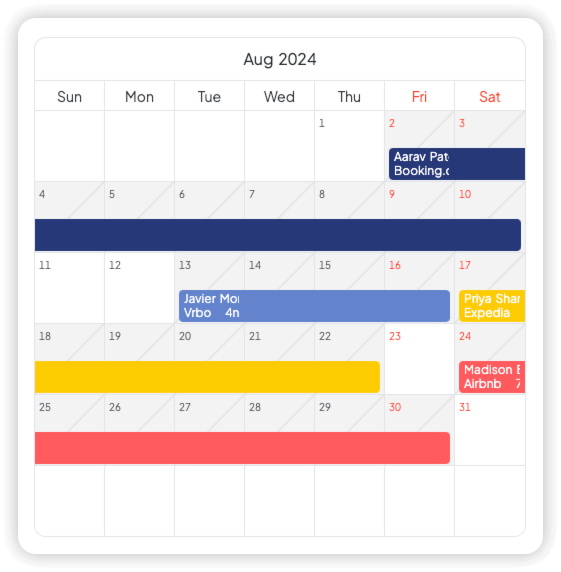
For example, in the booking calendar below, August 11th, August 12th, and August 23rd might be considered gap days due to short windows between confirmed bookings.
How do you fill out the Gap Days in your calendar?
1. Adjust Your Minimum Stay Policy
One of the most common ways to fill gap days is by adjusting your minimum stay policy. While many hosts set minimum stays of 3-4 nights during peak seasons or weekends, this approach can sometimes backfire by leaving gaps that are too short to be filled.
Expert Tip: To prevent these unwanted gaps, adjust your minimum stay requirements dynamically. For instance, reduce your minimum stay from 3 nights to 1 or 2 nights on weekdays or off-peak dates.
By applying flexible minimum stay policies tailored to specific days, you increase the chances of attracting guests who are looking for short stays or last-minute bookings.
If you’re managing your listings across multiple platforms, automating these adjustments can save you time and effort.
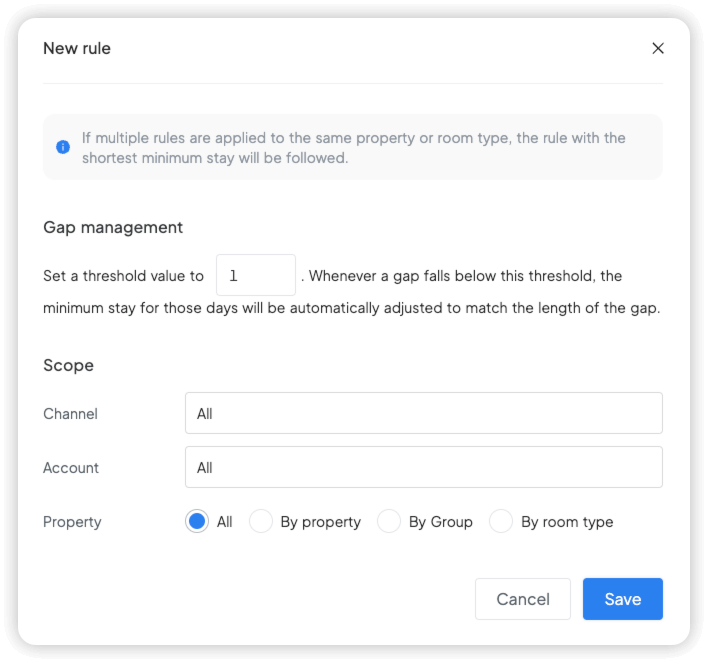
With Hostex’s automated gap management feature, for example, you can set up rules to adjust the minimum stay requirement automatically based on the gap length. So, if you have a 3-night minimum stay and a 1-night gap appears, Hostex can automatically adjust the settings to allow a booking for that gap.
2. Offer Discounts to Stimulate Bookings
Another effective way to fill gap days is by offering discounts on nights that are currently empty. Discounts are a proven method to attract more guests and incentivize them to book a stay that might otherwise seem too short or out of budget.
Expert Tip: Use dynamic pricing to adjust your rates based on the demand for gap days. For example, you might offer a 20% discount on available nights during weekdays or off-peak times. This pricing flexibility can increase your property’s visibility and improve your chances of filling the gap.
Additionally, leveraging social media to promote these discounted nights can help you reach previous guests or loyal followers who may be interested in booking a spontaneous getaway.
Also, ensure that any gap day discounts are applied directly on booking platforms like Airbnb to improve your listing’s search ranking, making it more likely to appear in search results.
Jason1967, an experienced Airbnb host, shares:
“We have lake houses not far from where we live. It seems pretty easy to book weekends, but the weekdays are where my gaps exist. I have lowered the weekday prices by about 20% of weekend prices, and that has helped fill weekday gaps. We have also changed to a 1-night minimum on weekdays, and that has helped fill the gaps, too. I know we have picked up a lot of guests who are traveling across the country and need just one night.”
3. List Your Property on Multiple Platforms
As the saying goes, “Don’t put all your eggs in one basket.” Relying solely on Airbnb to generate bookings is risky, especially when you’re trying to minimize gap days.
Expert Tip: Different OTAs (Online Travel Agencies) focus on various aspects and attract different types of guests. Therefore, in addition to Airbnb, consider showcasing your property on platforms like Booking.com, Vrbo, and Expedia. This ensures that all those searching for vacation rentals can see your listing. It’s also one of the most effective ways to increase your bookings and avoid Airbnb gap days.
When listing your property across multiple platforms, ensure calendar synchronization to prevent double bookings and penalties. Using a Channel Manager tool like Hostex can help you manage your listings across multiple platforms in real-time, keeping everything in sync.

4. Utilize Last-Minute Bookings
For gap days that appear closer to the check-in date, consider offering last-minute booking deals. Lowering your prices as the check-in date approaches can help you fill gaps that would otherwise remain empty.
Expert Tip: Use automatic price adjustments to ensure your rates are competitive. If your property is still available 24 to 48 hours before check-in, you can reduce the price by a certain percentage to increase its chances of being booked.
For example, if your property is still open for booking 12 hours before the guest’s arrival date, offering a 40-50% discount can significantly boost the likelihood of securing a reservation.
Using Hostex’s automated pricing tool, you can easily adjust prices based on occupancy levels and booking patterns to make sure you are not leaving money on the table.
5. Offer Early Check-In or Late Check-Out Services
Another way to fill gap days is by offering early check-in or late check-out services. These options can make your property more appealing to guests who are traveling and need flexibility with their schedules.
Expert Tip: Consider offering early check-in or late check-out services for a small fee, or as a complimentary gesture to improve guest satisfaction. This not only fills your gap days but also provides an opportunity to earn additional income or enhance your guest experience, leading to better reviews.
Offering these services can also make your property stand out in competitive markets, attracting guests who might otherwise choose another option due to scheduling conflicts.

Conclusion
Filling the Airbnb gap days requires more than just adjusting prices. By adopting the strategies outlined above, you can increase your chances of turning those empty nights into profitable bookings. Always stay proactive, evaluate market trends, and use automation tools to optimize your calendar management.
With dynamic pricing, cross-platform listings, and discount strategies, you’ll be well on your way to reducing gap days and maintaining a full calendar of happy guests.

 English
  Japanese
  Spanish
  Arabic
  French
  Russian
  German
  Portuguese
  Korean
  Italian
  Thai
Thai