

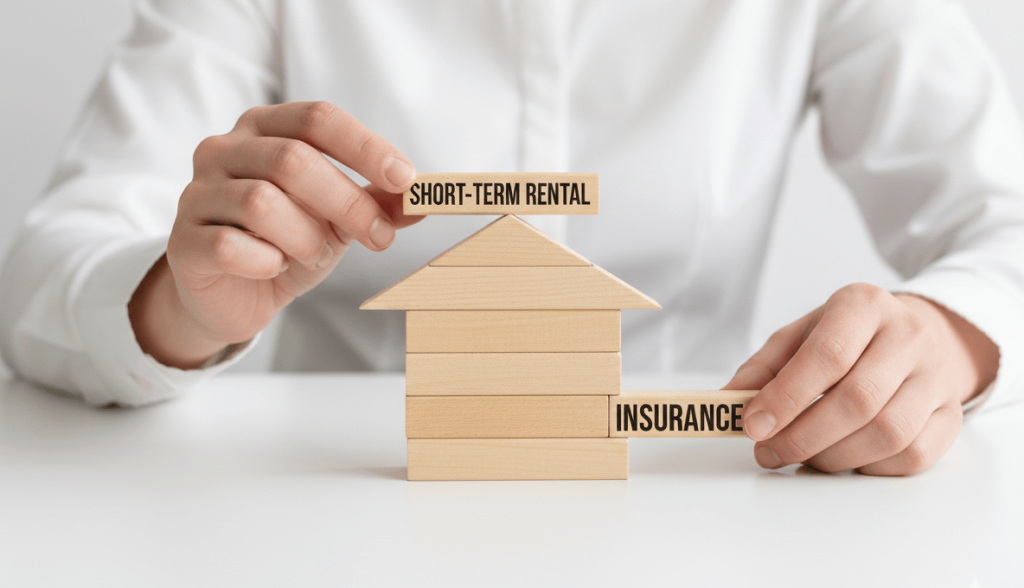
Running a vacation rental is generally safe, yet no host can guarantee total security. After all, you are opening your home to individuals who are essentially strangers. Most hosts understand the risks and invest in coverage to protect their assets. However, many discover too late that their standard homeowners insurance specifically excludes short-term rental activity.
This gap leaves your property and personal finances vulnerable when you need help the most. Consequently, understanding the nuances of short-term rental insurance is essential for any serious operator. This guide will help you navigate your options and ensure your business remains protected.
Managing a property involves more than just managing risk. Hostex can help you automate 70% of your daily repetitive tasks, allowing you to focus on growing your business. Plans start at just $4.90 per month.

What is Short-Term Rental Insurance?
To manage a successful rental, you must first understand that insurance is not a “one-size-fits-all” product. Short-term rental insurance is a specialized type of coverage designed specifically for the risks of hospitality. It bridges the gap between personal living and professional lodging.
Many hosts assume that “insurance is insurance,” but that misunderstanding can be costly. To clarify the differences, we should examine how the three most common policies operate in the real world.
| Policy Type | Best For | What it Assumes |
| Homeowners Insurance | Primary Residences | You live there full-time, and guests are friends or family. |
| Landlord Insurance | Long-Term Rentals | You have a tenant on a 6-month or 1-year lease. |
| Short-Term Rental Insurance | Airbnb / Vrbo / Direct | You have frequent turnover and high “business” activity. |
As you can see, the main difference comes down to the “Business Use” clause found in most standard contracts. When you list your home on a booking site, it effectively becomes a small hotel.
For example, if a guest accidentally starts a kitchen fire, a standard homeowners’ insurance policy might deny the claim because the fire happened during a commercial transaction. They see the “risk” as much higher when a stranger uses the appliances than when the owner does.
Key Protection Areas of Short-Term Rental Insurance
A dedicated short-term rental policy focuses on three critical areas that other policies often ignore:
- Commercial Liability: This protects you if a guest is injured on your property and decides to sue for medical bills.
- Contents Coverage: Standard landlord policies often only cover the building. Short-term rental insurance covers the furniture, electronics, and decor that guests actually use.
- Loss of Income: If a burst pipe makes your home unbookable for a month, this coverage compensates you for the revenue you would have earned from those lost reservations.
In short, this insurance treats your rental like the business it truly is. It provides a safety net that is specifically woven to catch the unique problems of the vacation rental industry.
How to Choose the Right Short-Term Rental Insurance
Selecting insurance should not be a game of finding the lowest premium. A truly effective policy provides certain financial support when you are most vulnerable. As a host, you can evaluate and filter your insurance options by focusing on these practical dimensions.
1. Confirm the Payout Method
This is a detail that many hosts overlook during the excitement of signing a new policy. You must ask the provider if they pay based on Replacement Cost or Actual Cash Value.
- Replacement Cost: If a guest destroys a three-year-old television, the insurer pays the current price to buy a brand-new, comparable model.
- Actual Cash Value: The insurer deducts three years of depreciation. Consequently, the payout may not even cover half the cost of a replacement. For a business operator, Replacement Cost is usually the better choice because it allows you to resume operations quickly without spending your own savings to bridge the gap.
2. Look Closely at Loss of Income Terms
If your property is offline for three months due to a fire or a burst pipe, you lose more than just the repair costs. You lose an entire season of revenue.
A high-quality policy includes “Business Interruption” coverage. When choosing, you should clarify:
- Is the payout based on your gross revenue or your net profit?
- Do you need to provide past tax returns or platform statements as evidence?
- What is the maximum duration of the payout period?
3. Evaluate the Liability Scope
Liability insurance exists to protect your personal assets from lawsuits. If a guest trips on your stairs and breaks a leg, the legal and medical fees can be astronomical.
Ideally, your liability coverage should be at least $1 million. Furthermore, you must check for “high-risk” exclusions. If your home features a swimming pool, a hot tub, or if you provide bicycles for guests, ensure these are explicitly covered. Many standard policies list these specific items as “excluded risks.”
4. Check the Unoccupancy Clause
Short-term rentals often sit empty for a week or more between bookings. Many traditional policies state that if a home is vacant for more than 30 consecutive days, the coverage automatically expires.
When selecting your policy, confirm that the home remains protected during gaps between guests. Professional short-term rental insurers understand the nature of the industry and usually do not include these restrictive vacancy clauses.
Key Precautions When Buying
- Total Honesty: Never hide your short-term rental activity from an insurer. While hiding the truth might save you a small amount in premiums today, it gives the company a legal reason to deny every claim later.
- Avoid Sole Reliance on Platforms: Do not treat Airbnb AirCover as your only line of defense. It is a helpful supplement, but it is not a formal insurance policy and does not cover your full legal risks as a property owner.
- Request Multiple Quotes: Reach out to brokers who specialize specifically in the vacation rental market. They can provide tailored plans based on your property type, whether it is an urban apartment or a beachfront villa.
A Practical Tip: Before signing, present a scenario to the agent. Ask them: “If a guest causes a small kitchen fire that makes the house unbookable for two weeks, exactly what costs will you cover?” Their answer will tell you immediately if the policy fits your actual needs.
Understanding Platform-Provided Protection
If you list your property on major sites like Airbnb or Vrbo, you already have a basic safety net. Airbnb offers AirCover, and Vrbo provides its own Liability Insurance. It is important to view these programs objectively. They are not “scams,” nor are they “complete” insurance policies. Instead, they serve as a valuable first layer of defense.
The Benefits of Platform Coverage
The most significant advantage of platform protection is that it is included in your host fees. You do not have to pay an extra monthly premium to benefit from it. Furthermore, these programs are designed specifically for the bookings made through their respective websites.
For instance, Airbnb’s AirCover includes $3 million in damage protection and $1 million in liability insurance. This covers everything from deep cleaning after a guest smokes in your home to major structural damage caused by a party. Because these programs are built into the platform, the reporting process is usually integrated directly into your hosting dashboard.
The Limitations You Must Consider
While these programs are helpful, they have several built-in weaknesses that every host should understand.
- Platform Specificity: This is the most critical limitation. AirCover only protects you during an Airbnb stay. If you take a direct booking or use another website that lacks such a program, you are completely unprotected.
- Secondary Coverage Status: Often, these programs act as “secondary” coverage. This means they may require you to file a claim with your own private insurance provider first. They only pay out once your primary policy has been exhausted or if your claim was denied.
- The Guest Involvement Friction: To claim damages, platforms often require you to request payment from the guest first. This can lead to tension, uncomfortable negotiations, and even retaliatory negative reviews.
- No Comprehensive Liability: Platform insurance protects you during the stay, but it does not protect your property 24/7. It will not cover a pipe bursting while the house is empty or damage from a natural disaster like a hurricane.
Think of platform protection like the emergency kit in your car. It is great to have it if something goes wrong during a specific trip, but it does not replace your actual car insurance policy.
To run a professional business, the most reliable strategy is to treat platform protection as an extra layer of security. Your private short-term rental insurance provides the foundation for your entire business. Meanwhile, AirCover acts as a specialized tool to handle smaller, guest-related issues without affecting your private policy’s claims history.
Beyond Insurance: Proactive Safety and Risk Management
While a solid insurance policy provides financial recovery after an incident, no host wants to experience an “Airbnb nightmare” in the first place. Insurance is your reactive safety net. To truly protect your investment, you must also build a proactive defense system. By implementing a few smart strategies, you can prevent many common issues before they ever reach the point of an insurance claim.
1. Smart Monitoring Technology
Technology allows you to keep an eye on your property without violating guest privacy. At a minimum, every home should have:
- Exterior Cameras: These help verify guest counts and deter unauthorized parties.
- Smoke and Carbon Monoxide Detectors: Many insurers actually require these for your policy to remain valid.
- Noise Sensors: Devices like Alertify alert you if decibel levels exceed a certain threshold. This allows you to stop a loud gathering before the neighbors call the police.
2. Secure Access with Smart Locks
Physical keys are a security risk. They can be lost or copied easily. Switching to smart locks allows you to generate unique codes for every guest that expire at checkout. This ensures that a former guest cannot re-enter your property after their stay has ended.
3. Rental Agreements and Security Deposits
Formalizing the relationship with your guest adds a professional layer of protection. For higher-value bookings or direct reservations, consider requiring a signed Short-Term Rental Agreement. This document outlines your house rules and provides legal leverage if a guest refuses to leave.
Furthermore, collecting a security deposit is a powerful deterrent against minor damages. Hostex makes this process simple by allowing you to automate the collection and return of deposits. When guests know their own money is on the line, they tend to treat your home with more respect.
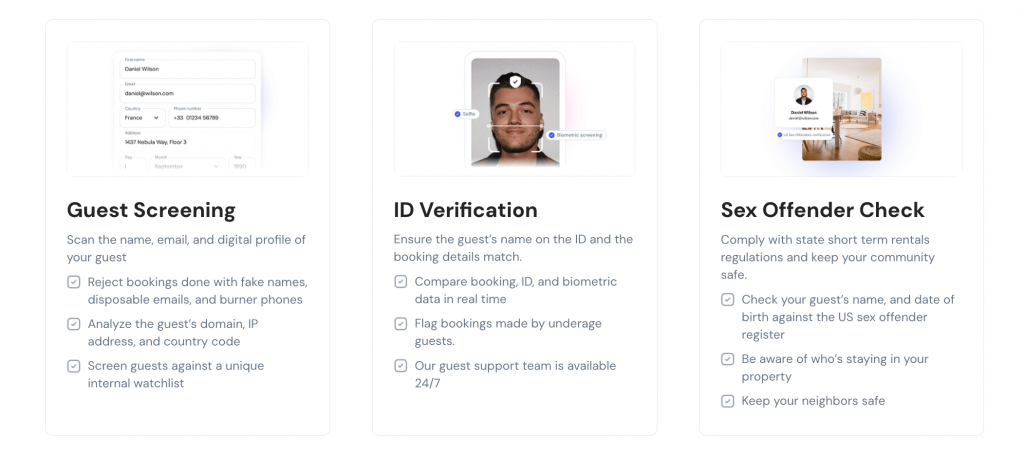
4. Professional Guest Screening
The most effective way to protect your home is to ensure the right people are walking through the door. Professional property managers often perform identity verification to filter out high-risk bookings.
This is where automation becomes your best ally. Through Hostex, you can seamlessly integrate professional tools like Truvi. This allows you to verify guest IDs and assess risk scores automatically before the check-in instructions are even sent. By combining the management power of Hostex with the screening expertise of Truvi, you catch potential red flags—like fraudulent identities or “party-house” profiles—before they ever step foot on your rug.
Final Thoughts
It is easy to view short-term rental insurance and guest screening as just another line item on your expense sheet. However, seasoned property managers understand that these are not just costs; they are investments in your ability to sleep at night. In the hospitality industry, your home is your most valuable asset. Protecting it properly ensures that a single unfortunate incident does not turn into a financial catastrophe.
Regardless of which insurance policy you choose or which screening tools you implement, your ultimate defense is evidence. If an accident or damage does occur, your priority must be documentation. Take high-quality photos and videos of the damage immediately. Keep a log of all communications with the guest and save every repair estimate or receipt. In the world of insurance adjusters and platform resolution centers, clear visual evidence is the most powerful tool you have. Detailed records will significantly impact the speed and success of your claim.
Ultimately, we hope you never have to use your insurance or file a damage report. Our goal is to help you build a resilient business that allows you to host with confidence. May your short-term rental journey be smooth, profitable, and—above all—safe.


 English
  Japanese
  Spanish
  Arabic
  French
  Russian
  German
  Portuguese
  Korean
  Italian
  Thai
Thai