
Many vacation rental hosts judge performance by bookings, occupancy, or nightly rates. Those numbers matter, but they do not tell you whether your property is actually making money. That is where vacation rental ROI comes in. ROI measures how much profit your investment generates after accounting for your costs. It also makes it easier to compare different properties and investment opportunities.
In this guide, you will learn how to calculate short-term rental ROI, understand the formulas investors use, and discover practical ways to improve your returns.
Hostex combines automated guest messaging, multi-calendar sync across channels, plus built-in reporting to help you track your short-term rental ROI with confidence. Plans start at $4.90/month.

What Is ROI in Short-Term Rentals?
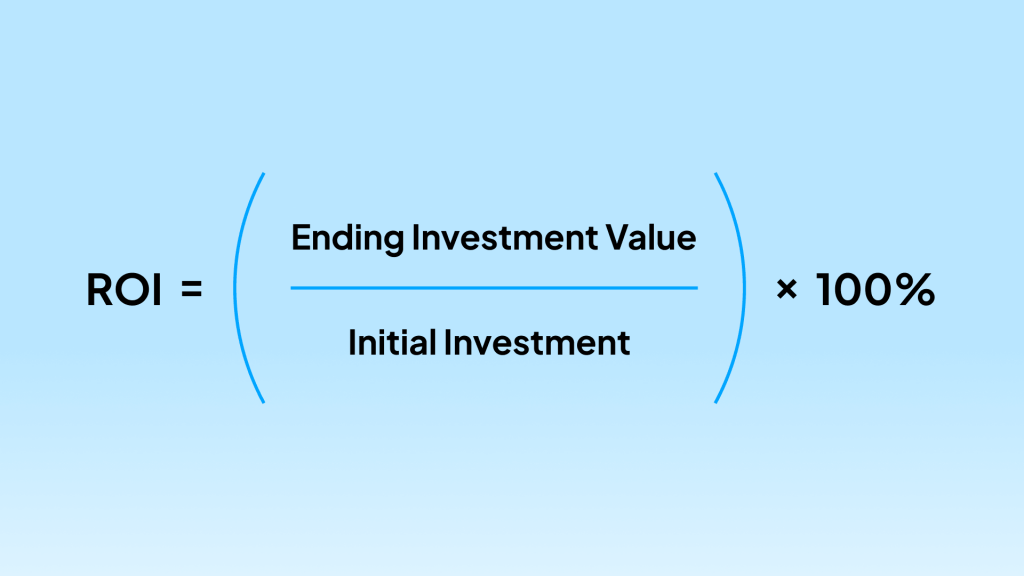
Return on Investment (ROI) measures the relationship between the profit you earn and the money you invest. It is usually expressed as a percentage.
The general formula is: ROI = (Profit ÷ Investment) × 100%
Simply put, a 10% vacation rental ROI means that for every $10 you invest, you earn $1 in profit.
The same concept and formula apply to short-term rentals. However, calculating your actual vacation rental ROI is often much more complicated. Rental income, operating expenses, financing, vacancy, and property appreciation all affect your final return.
That is why experienced investors look beyond a single ROI formula. Instead, they use several complementary metrics to evaluate a property’s true financial performance.
4 Vacation Rental ROI Metrics Every Host Should Know
There is no single metric that tells the whole story. You should use several measurements to evaluate short-term rental ROI from different angles. Each answers a different question.
| Métrique | Best Used For |
|---|---|
| Net Operating Income (NOI) | Measuring operating performance |
| Taux de capitalisation | Comparing properties before financing |
| Cash-on-Cash Return | Evaluating financed investments |
| Annualized ROI | Measuring long-term investment performance |
1. Net Operating Income (NOI)
NOI is the foundation of most real estate investment analysis. It measures how much income your property generates after operating expenses but before mortgage payments and income taxes.
NOI = Gross Rental Income − Operating Expenses
Operating expenses include property taxes, insurance, utilities, cleaning, maintenance, supplies, management fees, OTA commissions, marketing costs, and similar day-to-day expenses.
Mortgage payments are not included. Capital expenditures, such as replacing a roof or HVAC system, are also generally excluded from NOI. However, you should still budget for them when evaluating long-term returns.
Example:
Your property generates $48,000 in annual rental income. Operating expenses total $18,000.
NOI = $48,000 − $18,000 = $30,000
2. Cap Rate
Cap Rate measures the relationship between NOI and a property’s purchase price. It estimates the annual return if you bought the property with cash.
Cap Rate = (NOI ÷ Property Purchase Price) × 100%
Because the Cap Rate excludes financing, it is useful for comparing investment properties on equal terms. Many investors use it as a quick way to compare opportunities across different markets.
Example:
A property costs $350,000 and generates $30,000 in NOI.
Cap Rate = ($30,000 ÷ $350,000) × 100% = 8.57%
3. Cash-on-Cash Return
Cash-on-Cash (CoC) Return measures how efficiently your own cash is working. It is especially useful when you finance a property with a mortgage.
CoC Return = (Annual Pre-Tax Cash Flow ÷ Total Cash Invested) × 100%
Annual pre-tax cash flow equals NOI minus annual debt service. Your total cash investment usually includes:
- Down payment
- Closing costs
- Renovation expenses
- Furniture and equipment
Example:
You invest $87,500 as a down payment and spend $10,000 on closing costs and furnishing, the total cash invested is $97,500.
Your mortgage payments total $19,800 per year. Pre-tax cash flow = $30,000 − $19,800 = $10,200
Cash-on-Cash Return = ($10,200 ÷ $97,500) × 100% = 10.46%
4. Annualized ROI
Annualized ROI measures your average yearly investment return over the entire holding period. It combines operating income with changes in property value, making it useful for evaluating long-term investments.
One common way to calculate Annualized ROI is by using the compound annual growth rate (CAGR).
Annualized ROI = [(Ending Investment Value ÷ Initial Investment)^(1 ÷ Years Held) − 1] × 100%
Your ending investment value includes your original investment plus cumulative net cash flow and any gain or loss when you sell. In practice, you should also account for selling costs when estimating your final return.
Example
You invest $97,500 and hold the property for 5 years.
During that time:
① Cumulative net cash flow = $51,000
② Property value increases from $350,000 to $420,000
③ Appreciation = $70,000
Ending investment value = $97,500 + $51,000 + $70,000 = $218,500
Annualized ROI = [($218,500 ÷ $97,500)^(1 ÷ 5) − 1] × 100% = 17.5%
This number is much higher than the annual cash flow alone. That is because it includes both operating income and equity growth. Mortgage payments reduce yearly cash flow, but the principal portion also builds equity over time. Annualized ROI captures both effects, giving you a more complete view of your investment performance.
Step-by-Step ROI Calculation Example
Let us walk through a realistic short-term rental investment example using 2026 market conditions.
Property Details:
- Purchase price: $350,000
- Down payment: 25% ($87,500)
- Closing costs and furnishing: $10,000
- Mortgage: $1,650/month ($19,800/year)
- Total cash invested: $97,500
Revenue:
- 200 nights booked per year at a $225 average nightly rate
- Gross rental income: $45,000
Operating Expenses:
- Property taxes: $4,200
- Insurance: $2,400
- Utilities and internet: $3,600
- Cleaning (net cost): $2,000
- Maintenance and repairs: $3,000
- Supplies and amenities: $1,500
- OTA commissions: $4,725
- Software and tools: $720
- Total operating expenses: $22,145
Core Metrics
- NOI = $45,000 − $22,145 = $22,855
- Taux de capitalisation = ($22,855 ÷ $350,000) × 100% = 6.53%
- Annual pre-tax cash flow = $22,855 − $19,800 = $3,055
- Cash-on-Cash Return = ($3,055 ÷ $97,500) × 100% = 3.13%
Long-Term Outcome
Assuming 3% annual appreciation, the property is sold after 5 years for $405,000.
- Cumulative net cash flow over 5 years = $15,275
- Property appreciation gain = $70,000
- Total return = $85,275
- Annualized ROI = [(($85,275 ÷ $97,500)^(1 ÷ 5)) − 1] × 100% = 15.8%
The lesson: a property can look like a poor investment on cash flow alone, but deliver strong returns when you account for the full picture.
What Is a Good Vacation Rental ROI?
There is no single universal benchmark for vacation rental ROI. However, most institutional STR data providers and investment analytics platforms show a fairly consistent range.
| Source | Good ROI Range | Notes |
|---|---|---|
| AirDNA | 9% – 15% yield | Based on top-performing U.S. markets and historical STR performance data |
| AirROI | ~2% – 5% net yield in high-cost cities | Net yield analysis based on large-scale STR listing data and home price comparisons |
| STR Numbers | 8% – 12% cash-on-cash (solid range) | Common benchmark range used in STR underwriting models |
Across professional STR investment sources, a consistent pattern appears:
- 8% – 12% ROI is generally considered a solid short-term rental performance range
- Above 15% ROI is strong but typically comes with higher operational or market risk
- Below 5% ROI may indicate weak performance unless supported by long-term appreciation
ROI benchmarks vary significantly depending on market type.
For example, high-cost urban markets often show lower net yields, while smaller tourism-driven markets tend to deliver higher returns due to lower acquisition costs.
This is why investors should always compare ROI within similar market categories rather than relying on a single global benchmark.
6 Factors That Affect Your Vacation Rental ROI
Several key variables determine whether a short-term rental performs well or underdelivers. Understanding these factors helps you evaluate deals more realistically before investing.
1. Location
Location is the strongest driver of vacation rental ROI. It affects almost everything, including demand, nightly rates, taxes, insurance, and the regulatory environment.
For example, a beachfront property in a tourist-heavy area may generate high revenue but also come with higher costs and stricter regulations. In contrast, suburban rentals near hospitals or business hubs often produce more stable, predictable returns even if peak income is lower.
2. Financing Method
How you finance a property directly impacts your cash flow and Cash-on-Cash Return.
At higher interest rates, monthly mortgage payments can significantly reduce short-term profitability, even if the property performs well on paper. Lower rates or higher down payments can improve cash flow stability and reduce financial pressure.
Different loan structures, such as DSCR loans or conventional mortgages, also affect leverage and return expectations.
3. Occupancy Rate
Occupancy is one of the most underestimated drivers of ROI in short-term rentals.
Even small changes in occupancy can have a large impact on annual revenue. A property booked 75% of the year performs very differently from one booked 55%, even if nightly rates are similar.
This is why realistic occupancy assumptions are critical in any ROI projection.
4. Management Strategy
Your management approach affects both revenue and cost efficiency.
Self-management can improve margins by reducing fees, but it requires time and operational discipline. Professional property management typically increases costs but may improve occupancy and pricing performance through better systems and distribution.
5. Regulation Risk
Short-term rental regulations can change expected returns quickly.
Some cities impose licensing requirements, night limits, or zoning restrictions that directly affect revenue potential. In extreme cases, regulations can significantly reduce or even eliminate STR income.
Always review both current and proposed rules before investing.
6. Seasonality
Seasonality creates income fluctuations that directly impact annual ROI stability.
Highly seasonal markets often generate strong peak-season profits but weaker off-season performance. This makes cash flow planning more important, especially when financing is involved.
Maintaining cash reserves is essential in seasonal markets to handle low-demand periods.
How to Improve Your Vacation Rental ROI
Improving ROI is usually less about one big change and more about consistent optimization across pricing, operations, and cost control.
1. Optimize pricing with dynamic tools
Static pricing often leads to underperformance in both peak and low seasons.
Dynamic pricing tools adjust rates based on demand, local events, and market trends. This helps improve occupancy while maximizing revenue per available night.
2. Increase direct bookings
OTA platforms typically charge 12% to 18% per booking.
Building direct booking channels allows hosts to retain more revenue and reduce dependency on third-party platforms. Over time, this has a meaningful impact on overall ROI.
3. Control operating costs
Operating expenses directly reduce net profit, so even small improvements matter.
Common optimization areas include cleaning costs, utilities, insurance, and supply management. Many experienced hosts regularly review expenses to identify inefficiencies.
4. Add revenue streams
Beyond nightly rates, additional services can improve per-stay profitability.
Examples include early check-in, late checkout, pet fees, and optional add-ons. These adjustments typically increase revenue without significantly affecting occupancy.
5. Automate operations
Automation reduces workload and improves operational consistency.
Tasks like guest messaging, check-in instructions, review requests, and cleaning coordination can be automated to reduce errors and save time.
Tools like Hostex help streamline these workflows at a relatively low monthly cost, improving operational efficiency and supporting long-term vacation rental ROI.
Common ROI Calculation Mistakes
Even experienced hosts can miscalculate returns by overlooking key variables.
1. Forgetting hidden expenses
Costs like OTA commissions, cleaning, supplies, and software subscriptions are often underestimated. Over time, they can significantly reduce actual returns.
2. Using gross income instead of NOI
Gross revenue does not reflect true profitability. Only NOI accounts for operating expenses and gives a realistic performance view.
3. Ignoring vacancy rates
Assuming full occupancy leads to overly optimistic projections. Real-world occupancy varies significantly by market and season.
4. Mixing ROI metrics
Cap Rate, Cash-on-Cash Return, and ROI measure different aspects of performance. They should be analyzed separately rather than compared directly.
5. Ignoring capital expenditures
Long-term assets require reinvestment. Furniture, appliances, and systems all depreciate over time.
Failing to include CapEx can significantly overstate long-term returns.
Réflexions finales
Understanding vacation rental ROI is not just about learning formulas. It is about understanding how real investment returns are created over time.
Many new hosts focus too much on revenue or occupancy. However, strong short-term rental ROI comes from the balance between income, cost control, and long-term value growth.
In practice, two properties with similar earnings can deliver very different outcomes. The difference usually comes down to financing structure, operating discipline, and market selection.
There is no perfect ROI number to target. Instead, the goal is to understand what drives returns and how each decision affects your overall performance.
If you can consistently evaluate deals using NOI, cash flow, and long-term appreciation together, you will make more informed investment decisions and avoid common pitfalls that reduce profitability.
Tools like automation and reporting systems can also help you stay close to your numbers without adding operational complexity, especially as your portfolio grows.
Ultimately, a strong vacation rental ROI is not created by one factor. It is built through a combination of smart acquisition, efficient operations, and long-term thinking.


 French
  English
  Japanese
  Spanish
  Arabic
  Russian
  German
  Portuguese
  Korean
  Italian
  Thai
Thai