
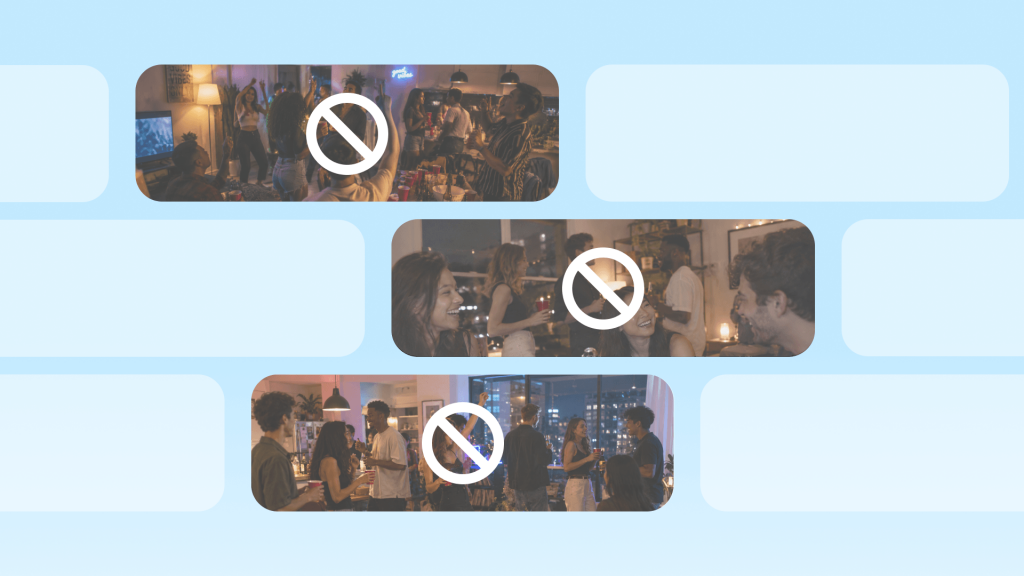
Airbnb has taken steps to prevent disruptive gatherings through its reservation screening system and party policies. However, no screening system can identify every risky reservation. Hosts still need their own safeguards to protect their properties and avoid problems with guests and neighbors.
This guide covers practical ways to reduce party risk before check-in, monitor activity during a stay, and respond to incidents while protecting your property and personal safety.
In breve:
- Document damage and request reimbursement: Keep photos, receipts, and relevant records, then follow Airbnb’s applicable reimbursement procedures.
- Adjust booking settings: Set appropriate minimum stays, advance-notice requirements, and occupancy limits to reduce party risk.
- Establish clear expectations: Publish occupancy and event settings before booking; confirm any eligibility and disclosure requirements before collecting additional data or a deposit.
- Control property access: Use reservation-specific smart lock codes and review access records when investigating incidents.
- Monitor potential disturbances: Use disclosed noise monitors, permitted exterior cameras, and neighbor reports to identify possible problems.
- Respond promptly to suspected parties: Contact the guest through Airbnb, report ongoing disturbances to Airbnb, and contact local emergency services if there is an immediate safety threat.
How to Prevent Airbnb Parties
The most effective approach is to combine several preventive measures. Start with booking settings that fit your property, then establish clear expectations and use appropriate tools to monitor activity.
1. Use Airbnb’s Party Screening
Airbnb uses an automated system to identify reservations that may carry a higher risk of disruptive gatherings. Its screening process considers signals related to the reservation and other relevant information. Depending on the circumstances, Airbnb may block a reservation or take additional steps to review it.
This system provides an additional layer of protection, but it cannot guarantee that every reservation is safe. A booking that passes screening may still result in a disruptive gathering.
2. Set a Minimum Stay
UN soggiorno minimo can make your property less attractive to people looking for a place to hold a short party.
- A two-night minimum is a reasonable starting point for weekends or dates when local demand may increase the risk of unauthorized gatherings.
- You can also consider longer minimum stays during major holidays, festivals, sporting events, or other periods of unusual demand.
The right setting depends on your market, so weigh the potential risk reduction against the revenue you could lose from shorter bookings.
3. Limit Same-Day and Last-Minute Bookings
Reservations made shortly before check-in leave you less time to review booking details, communicate with guests, and prepare for their arrival.
If last-minute bookings have caused problems at your property, consider increasing your advance-notice requirement. Airbnb lets hosts set advance-notice rules, including same-day reservations with a cutoff time or requirements for several days’ notice.
You do not necessarily need to disable last-minute bookings across every property. If they generate valuable revenue, consider restricting them only where the additional risk justifies the change.
4. Set a Clear Occupancy Limit
Set a maximum guest count that complies with local regulations, fire safety requirements, and the capacity of your property. Make the limit clear in your listing and house rules.
Your rules should also explain whether ospiti extra are allowed, whether all overnight guests must be included in the reservation, and how you handle unauthorized visitors or occupancy violations.
5. Confirm Arrival Details Before Check-In
Confirm the expected arrival time and number of guests through the Airbnb reservation conversation. Keep these questions focused on preparing the stay rather than making an external registration form a routine entry requirement.
Tools like Hostex Check-in Guide can deliver arrival information. If your workflow also asks guests to submit data, check the Airbnb requirements before enabling that part of the process.
6. Use a Security Deposit Where the Platform Allows It
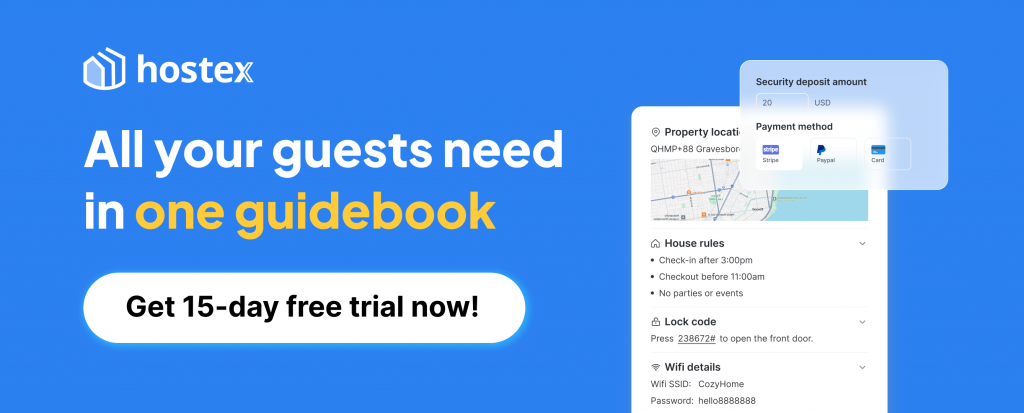
UN deposito cauzionale may provide an additional financial safeguard, but Airbnb generally does not allow hosts to charge security deposits directly. Certain software-connected hosts may qualify for an exception, subject to Airbnb’s requirements and disclosure rules.
Hostex supports security deposits for eligible setups. Hosts can configure the amount for a property, collect the deposit through a connected Stripe account, and manage its return or deduction through Hostex.
7. Use Smart Locks to Control Access
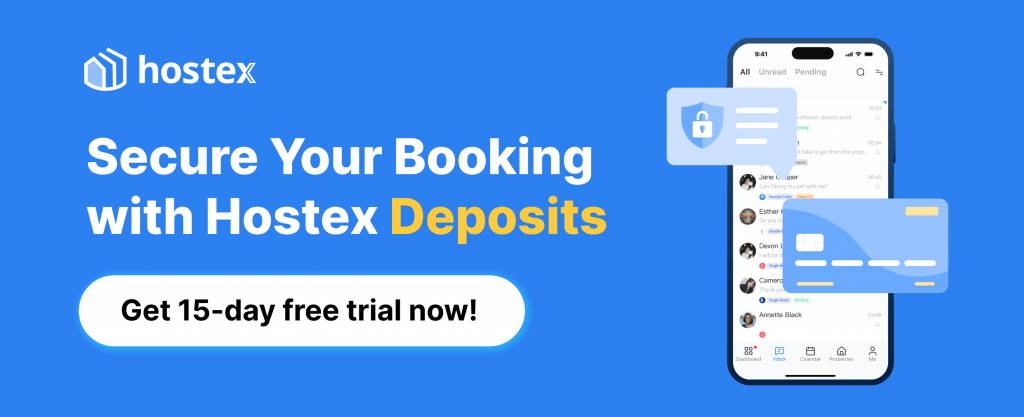
UN serratura intelligente helps you manage access without handing over physical keys or sharing one permanent code with every guest.
Hostex integrates with major smart lock brands and can automatically generate codes for reservations. Codes can be delivered through automated messages or the Hostex Check-in Guide. This reduces the risk of old codes being reused and makes access management easier.
Smart locks also record entry activity. These logs may help you investigate an incident, but they do not establish how many people entered or remained inside. Use them alongside other relevant information rather than treating them as proof of unauthorized occupancy.

8. Add a Noise Monitor
Airbnb allows indoor noise decibel monitors. Unlike an audio recorder, a noise decibel monitor measures sound levels without recording conversations.
Disclose the monitor’s presence in the listing and keep it out of bedrooms, bathrooms, and sleeping areas, as required by Airbnb’s device policy.
The main benefit is early warning. If noise levels become unusually high, you can contact the guest and address the situation before it develops into a more serious disturbance.
Hostex si integra con Avvisare so reservation and guest information can be associated with the relevant property and used in alerts and incident reports.
9. Use Exterior Cameras Where Permitted
Exterior cameras can help you observe activity around entrances, driveways, and other permitted areas. They may provide useful context when you receive a noise complaint or suspect that more people are arriving than the reservation allows.
However, you should notice that indoor security cameras are prohibited in Airbnb listings, even when switched off.
Review the platform’s current camera policy before installing or changing any security equipment.
10. Build a Neighbor Early Warning System
Neighbors may notice unusual activity before you do, especially if you manage the property remotely. Establishing a clear way for them to contact you can help you respond to potential disturbances sooner.
Let them know what information is useful, such as the approximate time of an incident or whether unusually heavy traffic is affecting the neighborhood. Avoid asking them to monitor guests continuously or investigate suspected violations themselves.
A neighbor’s report is a useful lead, not proof that a party is taking place. Follow up by checking the available information and contacting the guest when appropriate.
What to Do If You Suspect an Airbnb Party
If a noise alert, neighbor complaint, or other observation suggests that a gathering may be getting out of control, follow a clear response process.
1. Check the Available Evidence
Review the information relevant to the situation before contacting the guest.
- Noise monitor: Check whether elevated sound levels have continued beyond the device’s configured threshold.
- Exterior cameras: Review relevant footage for unusual activity around permitted viewing areas.
- Smart lock: Check access records if they may help establish a timeline.
- Reservation details: Compare the reported activity with the guest count and applicable house rules.
No single signal necessarily proves that a party is taking place. Consider the overall pattern and distinguish what you have directly observed from what you suspect.
2. Contact the Guest
Send a message through the platform’s messaging system. Describe the specific issue, refer to the relevant house rule, and explain what needs to change.
Per esempio:
Hi [name], we’ve received a noise alert from the property. Please keep the noise at a reasonable level and make sure the number of guests stays within the reservation and our house rules. Quiet hours begin at [time]. Please let us know if you have any questions.
Keep the message factual and professional. Avoid accusations that go beyond the evidence. Your communication gives the guest an opportunity to correct the problem and creates a written record of your response.
3. Contact Airbnb if the Problem Continues
If the guest does not respond or the disturbance continues, contact Airbnb through its available support and safety channels. Explain what is happening and provide relevant information, such as the timeline, messages, noise alerts, or permitted camera footage.
Airbnb prohibits disruptive gatherings and other community disturbances. Depending on the circumstances, it may take action against guests who violate its policies, including cancelling reservations or suspending accounts.
4. Avoid Confronting a Party in Person
Do not put yourself at risk by attempting to break up a gathering in person.
If you believe there is an immediate threat to someone’s safety, violence, or serious property destruction, contact the appropriate local emergency service. Follow local procedures and provide relevant information to the authorities.
For other disturbances, use the platform’s support channels and your established response process. A reservation dispute is not worth risking your personal safety.
What to Do If a Party Causes Damage
If a gathering results in property damage, focus on documenting the loss and following the appropriate reimbursement process.
Before cleaning or making repairs, take clear photos and videos of the damage when it is safe to do so. Keep receipts, invoices, repair estimates, and other records that establish the extent and cost of the loss. Save relevant guest messages, monitoring alerts, and access records that help establish the timeline.
For Airbnb reservations, hosts can request reimbursement through the Resolution Center. Airbnb’s Host Damage Protection offers up to $3 million in coverage for certain eligible damage, subject to its terms, conditions, and exclusions. It is not an insurance policy.
Airbnb’s reimbursement process has specific documentation and submission deadlines. Review the current requirements and submit your request within the applicable time limit. Do not assume that every type of damage or expense will qualify for reimbursement.
A security deposit, where permitted, may provide an additional source of financial protection, but it does not replace appropriate insurance. Airbnb also recommends that hosts review their existing coverage because AirCover has limitations and exclusions.
The key is to maintain clear records of what happened, what was damaged, and what it costs to resolve the issue.
Domande frequenti
Does Airbnb’s party ban actually prevent parties?
Airbnb’s party policies and reservation screening help reduce the risk of disruptive gatherings, but they cannot prevent every incident. Hosts should use the platform’s safeguards alongside appropriate booking restrictions, clear house rules, and a response plan.
What is the best way to prevent an Airbnb party?
There is no single setting that works for every property. A practical starting point is to combine suitable minimum-stay and advance-notice requirements with clear occupancy rules. Confirmed arrival arrangements, access controls, and permitted monitoring can provide additional safeguards.
Choose measures based on your property’s layout, location, booking patterns, and tolerance for last-minute reservations.
Should I disable same-day Airbnb bookings?
Not necessarily. Same-day bookings leave less time to review a reservation and prepare for arrival, but they may also generate valuable revenue.
If they have created problems at your property, consider requiring more advance notice. Otherwise, you can keep accepting them while using other measures to manage risk.
Are noise monitors worth it for Airbnb properties?
They can be useful for properties where noise complaints or unauthorized gatherings are a recurring concern. A noise monitor can alert you to sustained elevated sound levels, giving you an opportunity to contact the guest and address the issue.
Choose a device that suits your property and comply with Airbnb’s disclosure requirements and local privacy laws.
Can I use cameras to prevent Airbnb parties?
Airbnb permits exterior security cameras subject to its disclosure requirements and applicable laws. Indoor security cameras are prohibited in Airbnb listings.
Exterior cameras can provide information about activity around entrances and driveways, but they cannot establish everything happening inside a property. Use them only in permitted locations and as one part of your overall security approach.
Should I confront guests if I suspect a party?
No. Start by messaging the guest through Airbnb and explaining the specific issue. If the disturbance continues, contact Airbnb through its available support and safety channels.
If there is an immediate threat to personal safety or serious property damage, contact the appropriate local emergency service rather than attempting to intervene yourself.
Does a security deposit prevent Airbnb parties?
A security deposit may provide an additional financial safeguard, but it does not guarantee that guests will follow house rules.
Airbnb does not allow every host to charge a security deposit. Certain software-connected hosts may qualify under specific conditions, and any permitted deposit must be disclosed as required.
Eligible Hostex users can configure and manage security deposits through Hostex as part of their guest management process. Check your eligibility and the applicable platform requirements before enabling this feature.
 Italian
 English
 Japanese
 Spanish
 Arabic
 French
 Russian
 German
 Portuguese
 Korean
 Thai