
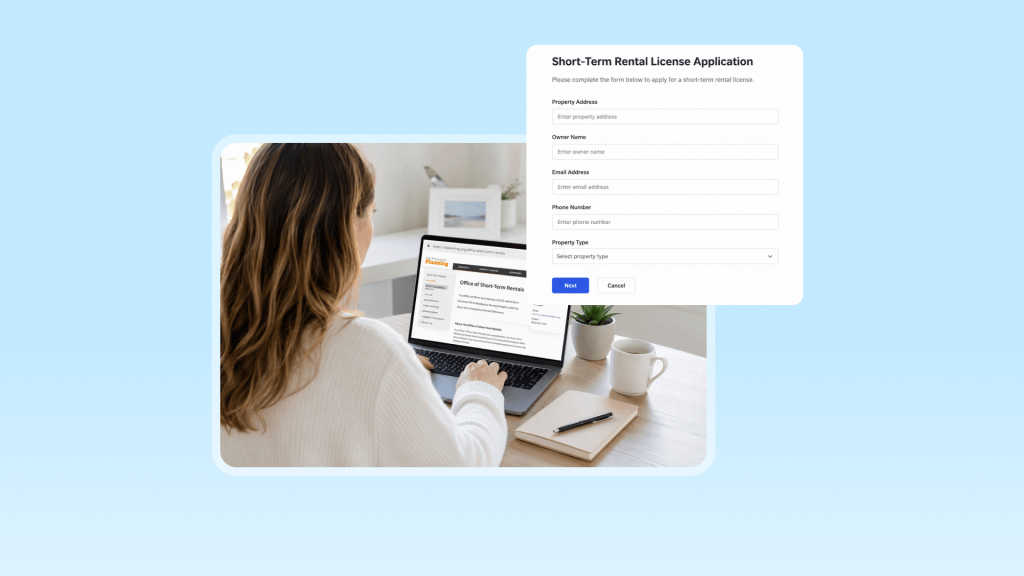
If you want to host on Airbnb, Vrbo, or other booking platforms, getting a vacation rental license is often one of the first legal steps. Depending on where your property is located, it may also be called a short-term rental license, vacation rental permit, or transient occupancy permit.
Local governments set licensing rules, so the requirements can differ from one city to another. Understanding the process before you accept your first booking can save you time, avoid costly mistakes, and help you stay compliant from day one.
In this guide, you’ll learn who needs a license, how the application process works, what documents to prepare, how much it typically costs, and what to do after your license is approved.
Do You Need a License to Rent Your Property?
In most U.S. markets, yes.
However, there is no single nationwide license for short-term rentals. Most requirements are created and enforced at the city or county level, which means the rules can be very different depending on where your property is located.
The key distinctions that affect whether you need a license:
- Primary residence vs. investment property. Some cities only allow short-term rentals in a primary residence or limit the number of non-owner-occupied properties you can operate.
- Entire home vs. private room. Renting a spare bedroom may be regulated differently from renting an entire house or apartment.
- Property type. Single-family homes, condos, accessory dwelling units (ADUs), and multifamily buildings may each be subject to different rules.
- Local zoning and HOA rules. Even if your city allows short-term rentals, your zoning district, condominium association, or homeowners association may prohibit or restrict them.
The most reliable source for short-term rental license requirements in your area is always the official government website of the jurisdiction where your property is located.
A simple search usually works:
- [Your city] + short-term rental license
- [Your city] + vacation rental permit
- [Your county] + transient occupancy registration
Avoid relying only on information from booking platforms or third-party blogs. These resources can be useful for understanding general rules, but local regulations may change faster than online summaries are updated.
Official Short-Term Rental License Resources in Major U.S. Markets
The following government pages are good starting points for hosts operating in major vacation rental markets:
| Localização | Official Resource | What to Check |
|---|---|---|
| New York City, NY | NYC Short-Term Rental Registration | Registration rules, eligibility requirements, and platform restrictions |
| Los Angeles, CA | Los Angeles Home-Sharing Ordinance | Primary residence requirements and registration rules |
| Seattle, WA | Seattle Short-Term Rental Licensing | Operator license requirements and listing rules |
| San Diego, CA | San Diego Short-Term Residential Occupancy (STRO) | License tiers, operating limits, and application requirements |
| San Francisco, CA | San Francisco Short-Term Residential Rental Program | Registration requirements and operating restrictions |
| Portland, OR | Portland Accessory Short-Term Rental Permits | Permit eligibility and operating requirements |
| Boston, MA | Boston Short-Term Rentals | Registration requirements and eligible property types |
| Denver, CO | Denver Short-Term Rental Licensing | Primary residence rules and license requirements |
| Austin, TX | Austin Short-Term Rental Licensing | License application and operating rules |
| Nashville, TN | Nashville Short-Term Rental Information | STR permit types and restrictions |
| Chicago, IL | Chicago Shared Housing Regulations | Registration, inspections, and compliance requirements |
| New Orleans, LA | New Orleans Short-Term Rental Administration | Permit categories and local restrictions |
| Miami Beach, FL | Miami Beach Vacation Rental Regulations | Local permits and operating requirements |
| Orlando, FL | Orlando Short-Term Rental Regulations | Registration and local requirements |
| Scottsdale, AZ | Scottsdale Short-Term Rental Information | Licensing and compliance rules |
| Phoenix, AZ | Phoenix Short-Term Rental Regulations | Registration and city requirements |
| Washington, DC | Washington DC Short-Term Rental License | License categories and hosting requirements |
| Honolulu, HI | Honolulu Short-Term Rental Registration | Eligible areas and registration requirements |
| Charleston, SC | Charleston Short-Term Rental Regulations | Permit zones and operating limits |
| Las Vegas, NV | Las Vegas Short-Term Rental Regulations | Licensing, zoning, and operating rules |
Regulations change frequently, so always confirm the latest requirements directly with the local government before accepting reservations.
What Documents Do You Need to Apply for a Short-Term Rental License?
Once you confirm that your property is eligible, the next step is preparing your application materials.
While every city has its own checklist, most short-term rental license applications require documents that prove three things:
- You have the legal right to operate the property
- The property meets local safety requirements
- You can comply with local business and tax obligations
Preparing these documents in advance can help you avoid delays during the review process.
Common Documents Required for a Short-Term Rental License Application
Most cities ask for some combination of the following:
| Document | Why It May Be Required |
|---|---|
| Government-issued ID | Verifies the identity of the property owner or applicant |
| Proof of ownership | Confirms that you own the property and have the right to operate a rental |
| Lease agreement or owner authorization | Required if you manage or rent a property that you do not own |
| Proof of primary residence | Used in cities that limit STRs to a host’s main home |
| Floor plan or property layout | Helps confirm bedrooms, exits, occupancy limits, and safety requirements |
| Property photos | Some jurisdictions request photos showing entrances, safety equipment, or the rental setup |
| Insurance documentation | Some cities require proof of liability coverage |
| Business license or tax registration | Required in locations that treat STR operations as a business |
| Safety compliance documents | May include fire extinguisher, smoke detector, or inspection records |
How to Apply for a Vacation Rental License: Step by Step
The application process is usually straightforward once you understand the requirements. Most hosts follow a similar workflow:
Check eligibility → Prepare documents → Submit application → Complete inspections (if required) → Pay fees → Receive approval
Step 1: Check Your Local Requirements
Before submitting an application, confirm that your property is eligible for a short-term rental license.
Review requirements related to:
- Property eligibility
- Zoning restrictions
- Primary residence rules (if applicable)
- HOA or building regulations
Some homeowners associations and property management companies prohibit short-term rentals even when local regulations allow them, so check these rules before applying.
Step 2: Gather Required Documents
Prepare all required documents before starting your application.
Common requirements include:
- Proof of ownership or authorization to operate the property
- Government-issued identification
- Primary residence documentation (if required)
- Insurance information
- Safety-related documents
- Business or tax registration records (if required)
Submitting a complete application can help avoid unnecessary delays during the review process.
Step 3: Complete the Application
Most cities provide an online application portal for short-term rental licenses.
You will typically need to:
- Create an account
- Provide property and operator details
- Upload supporting documents
- Pay the application fee
Some jurisdictions may still require additional paperwork or in-person verification, depending on their process.
Step 4: Schedule and Pass Inspections
Some cities require a safety inspection before approving a short-term rental license.
Inspectors may check items such as:
- Working smoke and carbon monoxide detectors
- Fire safety equipment
- Emergency exits and access routes
- Basic property safety conditions
If your property does not pass inspection, you will usually need to correct the issues and complete a follow-up review before approval.
Step 5: Pay Fees and Complete Submission
Short-term rental license fees vary significantly by location.
Depending on your market, you may need to pay:
- License or registration fees
- Business license fees
- Tax registration fees
- Inspection-related fees (if applicable)
Most government portals accept online payments during the application process.
Step 6: Receive Approval and Display Your License
Once your application is approved, the local authority will issue your short-term rental license or registration number.
Depending on local rules, you may need to:
- Display your license number on Airbnb, Vrbo, Booking.com, or other listing platforms
- Post a physical copy of the license inside the property
- Keep a digital copy for your records
Do not accept short-term rental bookings until your license is active and your property is legally approved to operate.

How Much Does a Vacation Rental License Cost?
The cost of a short-term rental license varies by location, permit type, and local requirements. Some markets charge only a small registration fee, while others require several hundred dollars for a full operating license.
The examples below show the range of fees in several major U.S. short-term rental markets. Always confirm the latest fee schedule with your local government before applying, as cities may update their rates over time.
| Localização | License or Registration Fee | Official Source |
|---|---|---|
| Seattle, WA | $75 per unit, renewed annually | Seattle requires STR operators to obtain a regulatory license and lists the fee as $75 per unit. (seattle.gov) |
| San Francisco, CA | $925 annual registration fee | San Francisco lists a Short-Term Residential Rental Registry Fee of $925 in its official fee schedule. (media.api.sf.gov) |
| Austin, TX | $836.30 for a new STR operating license | Austin lists a new STR operating license fee of $836.30, including the license fee and notification fee. (austintexas.gov) |
| San Diego, CA | $193 to $1,129 license fee depending on STR tier, plus application fees | San Diego uses different license tiers with different fees based on the type of short-term rental operation. (sandiego.gov) |
| Los Angeles, CA | $441 for home-sharing registration or renewal | Los Angeles lists a home-sharing registration application and renewal fee of $441. (American Legal Publishing) |
| Boston, MA | $25 to $200 annually depending on STR category | Boston’s STR program lists different annual fees based on the type of short-term rental unit. (Boston.gov) |
| Portland, OR | Permit fees vary by STR permit type and are updated through city fee schedules | Portland publishes current STR permit fee updates through its official permitting information. (Portland.gov) |
| Washington, DC | License fees are determined by local rules and license category | Washington, DC requires STR license applicants to pay the applicable license fee set by the District. (code.dccouncil.gov) |
The license fee is only one part of the total cost of becoming compliant. Depending on your location, you should also consider these additional costs:
- Business license or registration: Some cities require STR operators to maintain a separate business license in addition to their rental permit.
- Tax registration: Markets that collect lodging taxes or transient occupancy taxes may require hosts to register before accepting guests.
- Safety requirements: You may need to purchase or upgrade safety equipment, such as smoke detectors, carbon monoxide detectors, or fire extinguishers.
- Seguro: Some jurisdictions require proof of liability coverage, and many hosts choose dedicated short-term rental insurance to protect against risks that standard homeowner policies may not cover.
How Long Does It Take to Get a Vacation Rental License?
The approval time for a short-term rental license depends on whether your application requires additional review, such as inspections, zoning checks, or manual verification.
The following examples show how processing timelines can vary across different cities:
| Localização | Estimated Processing Time | Official Source |
|---|---|---|
| New York City, NY | Initial determination typically within 3 business days, although complex applications may take longer | NYC Office of Special Enforcement states that processing depends on application volume and complexity, and aims to provide an initial determination within 3 business days. (nyc.gov) |
| Seattle, WA | Online applications can proceed after required business license information is available; paper applications may take longer | Seattle requires operators to complete business license requirements before applying for an STR regulatory license and notes that paper applications take longer to process. (seattle.gov) |
| San Francisco, CA | Processing time varies depending on application completeness and review workload | San Francisco’s Office of Short-Term Rentals reviews registration applications and requires eligible hosts to receive approval before operating. (sfplanning.org) |
| Denver, CO | Processing time varies depending on application completeness and city review | Denver processes STR license applications through its online licensing system, with approval dependent on submitted information and compliance requirements. (denvergov.org) |
| Washington, DC | Processing time depends on application review and license requirements | DC processes short-term rental licenses through the Department of Licensing and Consumer Protection. (dc.gov) |
Several issues commonly extend the review process:
- Incomplete Applications: Missing documents, incorrect property information, or unanswered questions from the licensing office can delay approval.
- Required Inspections: If your city requires a safety inspection, approval may depend on completing the inspection and correcting any issues found.
- Zoning or Eligibility Review: Some properties require additional review to confirm that short-term rentals are allowed at that location.
- High Application Volume: During periods when new regulations take effect, licensing offices may receive a large number of applications, increasing review times. For example, New York City’s Office of Special Enforcement noted that application volume and complexity can affect processing times.
Common Reasons a Short-Term Rental License Application Gets Rejected
Most short-term rental license applications are not rejected because of a single missing detail. In many cases, denials happen because the property does not meet local requirements, the application contains incorrect information, or the rental operation violates existing rules.
Understanding the most common rejection reasons can help you identify problems before submitting your application.
1. The Property Is Not Eligible for Short-Term Rentals
The most serious issue is applying for a property that cannot legally operate as a short-term rental.
Common reasons include:
- The property is located in a restricted zoning area
- The property type is not eligible
- The rental violates local occupancy rules
- The building prohibits short-term rentals
For example, New York City’s Short-Term Rental Registration Law allows the city to deny registrations for buildings where short-term rentals are prohibited.
How to avoid it:
Confirm that your property is eligible before applying. Check local zoning rules, building restrictions, and any HOA or lease limitations.
2. The Application Contains Incorrect or Missing Information
Licensing departments need accurate information to verify your property and operating eligibility.
Applications may be rejected because of:
- Missing required information
- False or misleading statements
- Incorrect property details
- Expired or invalid documents
For example, Sacramento lists incomplete applications and false or misleading information among the reasons a short-term rental permit may be denied.
How to avoid it:
Review your application carefully before submission and make sure every document matches the property and applicant information.
3. The Property Fails Safety or Compliance Requirements
Some cities require properties to meet safety standards before approving a license.
Potential issues include:
- Uncorrected building code violations
- Fire safety problems
- Unsafe property conditions
- Missing required safety equipment
New York City, for example, may deny short-term rental registration when a property has unresolved violations involving construction codes, housing maintenance codes, or fire codes.
How to avoid it:
Resolve known safety issues before applying and complete any required inspections or compliance checks.
4. The Area Has Reached Its License Limit
Some cities limit the number of short-term rental licenses available in certain areas or categories.
If a market has reached its limit, a complete application may still not receive approval.
How to avoid it:
Check whether your city uses license caps, waiting lists, or restricted permit categories before submitting an application.
What Should You Do If Your Application Is Denied?
If your application is rejected, review the reason provided by the licensing authority first.
Depending on the issue, you may be able to:
- Correct inaccurate information
- Submit missing documentation
- Resolve safety violations
- Apply again after fixing eligibility problems
The next step depends on the specific reason for denial, so avoid submitting a new application until the original issue has been addressed.
What Happens After You Get Your License?
Getting approved for a short-term rental license is not the final step. Most cities require hosts to continue meeting local requirements after the license is issued.
The main responsibilities after approval usually include displaying your license information, renewing on time, and keeping your rental operation compliant with local rules.
1. Display Your License Number Where Required
Many cities require hosts to display their short-term rental license number on booking platforms and advertisements.
For example, Seattle requires STR operators to include their license number on every listing advertising the rental, including platforms such as Airbnb and Vrbo. Incorrect formatting may cause platforms to remove listings.
Other cities also require license information to be visible inside the property. Washington, DC requires hosts to post a copy of their short-term rental license endorsement inside the rental unit during guest stays.
After approval, update your:
- Airbnb listing
- Vrbo listing
- Booking.com listing
- Direct booking website
if your local regulations require license disclosure.
2. Renew Your License Before It Expires
Most short-term rental licenses are not permanent. Many jurisdictions require annual renewal or periodic re-registration.
For example, Seattle’s short-term rental operator license is valid for 12 months and must be renewed before expiration.
Before renewal, check whether your city requires updated information, such as:
- Current contact details
- Insurance documents
- Tax registration information
- Updated property information
Set a reminder several weeks before expiration to avoid accidentally operating with an inactive license.
3. Keep Your Property Compliant
A valid license does not exempt you from ongoing operating requirements.
Depending on your location, you may need to maintain:
- Required safety equipment
- Occupancy limits
- Guest records
- Local contact information
- Required notices inside the property
For example, Salt Lake City requires licensed short-term rentals to display city-provided notices inside the property and maintain the property according to local requirements.
4. Monitor Local Rule Changes
Short-term rental regulations can change over time. Cities may update:
- License fees
- Renewal requirements
- Operating restrictions
- Tax rules
- Eligibility requirements
A license that was valid when issued may still require updates later if local regulations change.
Subscribe to your local licensing department updates or check official STR resources periodically to stay compliant.
Running a vacation rental involves much more than getting licensed. Once you’re ready to host, an all-in-one PMS like Hostex can help manage reservations, guest communication, calendars, and day-to-day operations from a single dashboard, with plans starting at $4,90 por propriedade por mês.

FAQs About Short-Term Rental Licenses
Can I rent my property without a short-term rental license?
In many U.S. cities, no. Operating a short-term rental without the required license or registration may result in fines, listing removal, or other enforcement actions.
However, requirements vary by location. Some smaller communities may not require a short-term rental license, so always confirm the rules with your local government before accepting guests.
How much does a short-term rental license cost?
The cost depends on your location and the type of permit required.
Some cities charge a small registration fee, while others require several hundred dollars for a full license or additional registrations. You may also need to budget for related costs such as business registration, taxes, insurance, or required safety upgrades.
Can I accept bookings while my short-term rental license application is pending?
Usually, no.
A submitted application does not mean your property is approved to operate. In most markets, you should wait until your license or registration is officially issued before accepting short-term rental reservations.
Do I need a separate license for each property?
In most locations, yes.
Short-term rental licenses are usually tied to a specific property or rental unit rather than the owner alone. If you operate multiple properties, you may need separate licenses or registrations for each address.
How often do I need to renew my short-term rental license?
Most short-term rental licenses require periodic renewal, often every year.
Renewal requirements vary by location and may include paying a renewal fee, confirming property information, or updating required documents. Check your local licensing authority’s renewal schedule to avoid operating with an expired license.


 Portuguese
  English
  Japanese
  Spanish
  Arabic
  French
  Russian
  German
  Korean
  Italian
  Thai
Thai