
Most Airbnb hosts know their معدل الإشغال, إيرادات الغرفة المتوافرة, and revenue. But those numbers alone do not tell you whether your property is actually performing well as an investment. This is why many experienced Airbnb investors look beyond revenue and focus on Airbnb cap rate — a metric designed to evaluate how efficiently a property generates income compared with its value.
Understanding cap rate helps hosts make better decisions, whether they are evaluating a new investment, comparing properties, or looking for ways to improve an existing Airbnb business.
What Is Airbnb Cap Rate?
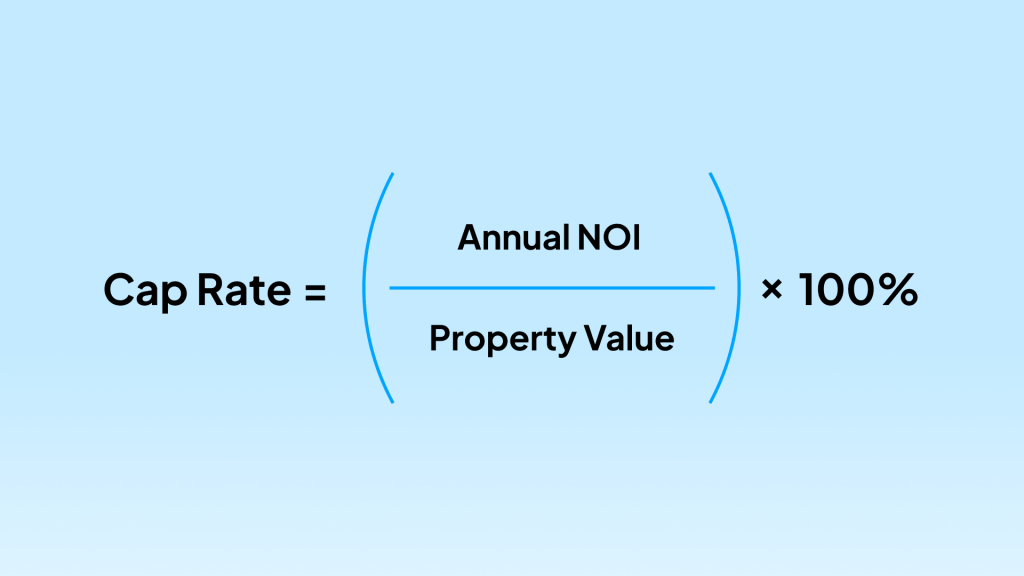
Airbnb cap rate (capitalization rate) is a metric used to measure the operating return of a short-term rental property based on the income it generates compared with its value.
Cap Rate = Annual NOI ÷ Property Value × 100%Cap rate is commonly used by real estate investors because it allows properties with different prices to be compared on a more consistent basis.
This distinction matters because two properties with similar revenue can have very different investment performance.
على سبيل المثال:
- A beachfront Airbnb earning high revenue may have a lower cap rate because the property itself is extremely expensive.
- A smaller vacation rental in an emerging market may produce a higher cap rate because the purchase price is lower relative to its income.
What Is a Good Cap Rate for Airbnb?
There is no single cap rate that works for every Airbnb property. A “good” Airbnb cap rate depends on several factors, including:
- موقع
- Property price
- Market maturity
- Revenue stability
- Regulation risk
- Management efficiency
That said, many vacation rental investors use the following ranges as general benchmarks:
| معدل الرسملة | General Interpretation |
|---|---|
| Below 5% | Lower operating return, often associated with expensive markets or appreciation-focused investments |
| 5-8% | Often considered a balanced range between income and stability |
| 8-12% | Strong cash-flow potential, but usually requires closer risk evaluation |
| Above 12% | May indicate an exceptional opportunity or higher underlying risk |
For Airbnb hosts, the right benchmark depends on what they are trying to achieve:
- Investors seeking reliable cash flow may prioritize higher cap rates.
- Owners in premium markets may accept lower cap rates because of appreciation potential.
- Existing hosts may focus less on comparing against market averages and more on improving their own property’s performance over time.
A higher cap rate is not automatically better. A property generating a 12% cap rate may look attractive, but the return could be supported by temporary factors such as unusually strong demand, low property prices, or limited competition.
Meanwhile, a property with a lower cap rate may provide more predictable long-term performance in a stable destination.
How to Calculate Airbnb Cap Rate (Step-by-Step)
Unlike simple revenue calculations, cap rate focuses on what remains after operating expenses are paid.
For Airbnb properties, the calculation process has four main steps.
Step 1: Calculate Your Annual Airbnb Revenue
Start with all income generated by the property over a full year. This may include:
- Nightly booking revenue
- Cleaning fees collected from guests
- Pet fees
- Extra guest fees
- Other rental-related income
Step 2: Calculate Annual Operating Expenses
Next, subtract the ongoing costs required to run your vacation rental. Typical Airbnb operating expenses include:
- Property taxes
- تأمين
- المرافق
- Internet services
- تكاليف التنظيف
- الصيانة والإصلاحات
- اللوازم والمرافق
- Property management fees
- Airbnb, Vrbo, or other OTA fees
- Software subscriptions
Important: Mortgage payments are not included when calculating Airbnb cap rate because they depend on your financing strategy, not the property’s operating performance. A cash buyer and a financed buyer may have different monthly payments, but the property’s NOI remains the same.
Step 3: Determine Your NOI (Net Operating Income)
After subtracting operating expenses from your rental income, you get your نوي.
NOI = Gross Operating Revenue - Operating ExpensesNOI represents the property’s operating income after normal operating expenses but before financing costs, taxes, depreciation, and major capital expenditures.
Step 4: Divide NOI by Property Value
Once you know your NOI, compare it with the property’s current market value. The formula is:
Cap Rate = Annual NOI ÷ Property Value × 100%Airbnb Cap Rate Example
Let’s look at a realistic vacation rental example.
- Property type: 3-bedroom Airbnb vacation home
- Market: Established mountain destination
- Property value: $450,000
- Annual revenue:
| Income Source | كمية |
|---|---|
| Nightly bookings | $52,000 |
| Cleaning fees collected | $7,000 |
| Additional guest fees | $1,000 |
| Total Revenue | $60,000 |
- Annual operating expenses:
| Expense | كمية |
|---|---|
| Property taxes | $4,000 |
| تأمين | $3,000 |
| Utilities and internet | $4,200 |
| تكاليف التنظيف | $8,000 |
| الصيانة والإصلاحات | $3,500 |
| اللوازم والمرافق | $2,000 |
| OTA fees | $5,500 |
| Software tools | $800 |
| Total Expenses | $31,000 |
- نوي: Total Revenue – Operating Expenses = $60,000 – $31,000 = $29,000
- معدل الرسملة: NOI ÷ Property Value = $29,000 ÷ $450,000 × 100%= 6.4%
What Factors Affect Airbnb Cap Rate?
Unlike traditional long-term rentals, short-term rentals are highly operational businesses. The way a property is priced, managed, and maintained can significantly affect the income it produces — and therefore its cap rate.
The main factors that influence Airbnb cap rate include:
1. Revenue Performance and Pricing Strategy
Revenue is one of the biggest drivers of Airbnb cap rate because higher income generally increases operating returns.
Two similar properties in the same market can generate very different results because of differences in:
- Nightly pricing
- Minimum stay settings
- Seasonal adjustments
- Local event pricing
- Revenue management strategy
A property that relies on fixed pricing may perform well during peak seasons but miss opportunities during periods of changing demand.
On the other hand, hosts who adjust pricing based on market conditions can often generate more consistent revenue throughout the year.
2. Occupancy and Demand Stability
Occupancy rate directly affects how much income a vacation rental generates, but the quality of occupancy matters too.
A property booked almost every night at heavily discounted rates may not produce better returns than a property with fewer bookings at higher prices.
Cap rate is influenced by:
- Annual booked nights
- Seasonal demand patterns
- Market tourism trends
- Guest demand consistency
A year-round destination with stable demand may produce a more predictable cap rate than a highly seasonal market where most revenue comes from only a few peak months.
3. Operating Expenses
A property’s income potential means little if operating costs are too high.
Expenses that can reduce Airbnb cap rate include:
- High cleaning costs
- Expensive property management fees
- Excessive maintenance expenses
- Rising insurance costs
- Inefficient utility usage
- Uncontrolled software subscriptions
For existing hosts, expense management is often one of the fastest ways to improve profitability without increasing bookings.
4. Location and Market Conditions
High-demand destinations often generate high rental income, but they may also have expensive property prices that reduce the cap rate.
Other location factors include:
- Tourism demand
- Local regulations
- Competition among rentals
- Future development plans
- Market growth potential
5. Short-Term Rental Regulations
Some restrictions can reduce future income potential and make investors less willing to pay premium prices, such as:
- Rental permits
- Night limits
- Zoning requirements
- Primary residence rules
- Additional taxes
On the other hand, markets with clear and stable short-term rental policies often provide more predictable operating conditions.
6. Property Quality and Guest Experience
The condition and positioning of a property can influence both revenue and operating costs.
Properties with better design, more attractive amenities, and strong reviews often achieve higher nightly rates and stronger demand.
However, property improvements should be evaluated carefully. A renovation that increases guest appeal does not automatically improve cap rate unless the additional income justifies the investment.
How to Increase Your Airbnb Cap Rate
Since cap rate depends on operating income and property value, hosts generally improve it in two ways:
- Increase income generated by the property
- Reduce unnecessary operating costs
Here are the most effective strategies.
1. تحسين استراتيجية التسعير الخاصة بك
Revenue flows directly into operating income; better pricing can have a meaningful impact on the cap rate.
Demand changes constantly based on:
- Holidays
- الأحداث المحلية
- الموسمية
- Competitor pricing
- Booking pace
A dynamic pricing approach helps adjust rates based on real market conditions, allowing hosts to capture more revenue during high-demand periods while remaining competitive during slower periods.
2. Add Additional Revenue Streams
Increasing revenue does not always require more bookings. Many Airbnb hosts improve profitability by adding services such as:
- Paid Upgrades
- Early check-in or late checkout
- Pet supplies
- Mid-stay cleaning
- Upsells / Add-on sales
- Vacation experiences (spa, hiking, etc.)
3. Increase Direct Bookings
OTA platforms such as Airbnb and Vrbo provide valuable demand, but commissions reduce the income a host keeps from each reservation.
Building a direct booking strategy can help reduce dependency on third-party channels by allowing hosts to:
- Keep more revenue
- Build repeat guest relationships
- Reduce acquisition costs over time
Even a small percentage increase in direct bookings can improve overall profitability.
4. Reduce Operational Costs
Labor and operational inefficiency can quietly reduce Airbnb profitability. Common time-consuming tasks include:
- التواصل مع الضيوف
- تعليمات تسجيل الوصول
- Review requests
- تنسيق عمليات التنظيف
- Calendar management
Automation helps hosts reduce manual work, prevent missed tasks, and create more consistent operations. For hosts managing multiple listings, reducing operational friction can directly improve NOI and increase the cap rate.
This is where property management software can create measurable value.
أدوات مثل هوستكس help automate guest messaging, multi-channel calendar synchronization, cleaning workflows, and operational reporting, allowing hosts to manage properties more efficiently.

Common Mistakes When Using Airbnb Cap Rate
Cap rate is a useful metric for evaluating Airbnb investments, but it can also be misleading when used incorrectly.
Here are the most common mistakes to avoid.
1. Comparing Cap Rates Across Different Markets
A 6% cap rate in one market may represent a strong investment, while the same number in another market may indicate underperformance.
Instead of comparing your Airbnb only against properties in different locations, compare it with similar properties in the same market and category.
2. Treating Cap Rate as the Only Investment Metric
Cap rate is valuable, but it does not tell the entire investment story.
It does لا include:
- Mortgage payments
- Property appreciation
- Tax benefits
- Future market growth
- Personal investment goals
A property with a lower cap rate may still be attractive if it has strong appreciation potential or strategic value.
Use cap rate together with other metrics such as ROI, cash-on-cash return, occupancy rate, and ADR.
3. Using Outdated or Unrealistic Income Estimates
Airbnb performance can change quickly. Using old assumptions can result in an inaccurate cap rate calculation.
When evaluating performance, use recent operating data whenever possible and update your assumptions regularly.
4. Forgetting That Cap Rate Changes Over Time
Cap rate is not a permanent characteristic of a property. It can change when:
- Revenue increases or decreases
- Operating costs change
- Property values rise or fall
- Market conditions shift
For example, a host who improves pricing, reduces unnecessary expenses, and increases operational efficiency may improve the cap rate without changing the property itself.
التعليماتs about Airbnb Cap Rate
What’s the difference between Cap Rate vs NOI vs ROI vs RevPAR vs Occupancy Rate vs ADR?
Airbnb hosts often track multiple metrics to evaluate performance, but each metric measures a different part of the business. Understanding the difference helps you avoid optimizing the wrong numbers.
| متري | Measures | Main Question |
|---|---|---|
| معدل الرسملة | Operating return compared with property value | Is this property generating an appropriate return? |
| نوي | Income after operating expenses | How much operating profit does the property produce? |
| عائد الاستثمار | Overall investment return | How effective is my total investment? |
| إيرادات الغرفة المتوافرة | Revenue generated per available night | How efficiently is my inventory being monetized? |
| معدل الإشغال | Percentage of booked nights | How strong is demand? |
| ADR | Average revenue per booked night | How much am I earning from each reservation? |
Does Airbnb cap rate include mortgage payments?
No.
Cap rate does not include mortgage payments because it measures the property’s operating performance regardless of how it is financed.
If you want to evaluate how much return you earn on your actual cash invested, metrics such as cash-on-cash return may be more useful.
Is a higher Airbnb cap rate always better?
No.
A higher cap rate can indicate stronger income potential, but it may also come with higher risks, such as:
- Seasonal demand
- Regulatory uncertainty
- Lower property appreciation potential
- Market instability
A lower but more stable cap rate may sometimes be the better long-term investment.
Why is my Airbnb revenue high but my cap rate low?
Common reasons include:
- The property value is very high compared with the income
- Operating expenses are too large
- Management costs are reducing profitability
- The pricing strategy is not optimized
Improving profitability requires looking beyond revenue and focusing on the relationship between income, expenses, and property value.
Can the Airbnb cap rate change?
Yes.
Cap rate changes when either operating income, costs, or property value changes.
على سبيل المثال:
- Higher revenue can increase the cap rate.
- Lower expenses can increase the cap rate.
- Rising property values can reduce the cap rate if income does not increase at the same rate.
This is why Airbnb hosts should monitor performance regularly rather than treating the cap rate as a one-time calculation.
How can I improve my Airbnb cap rate?
Because cap rate is driven by operating performance, better management can often improve returns without purchasing a new property.
The most effective ways to improve Airbnb cap rate are:


 Arabic
  English
  Japanese
  Spanish
  French
  Russian
  German
  Portuguese
  Korean
  Italian
  Thai
Thai