
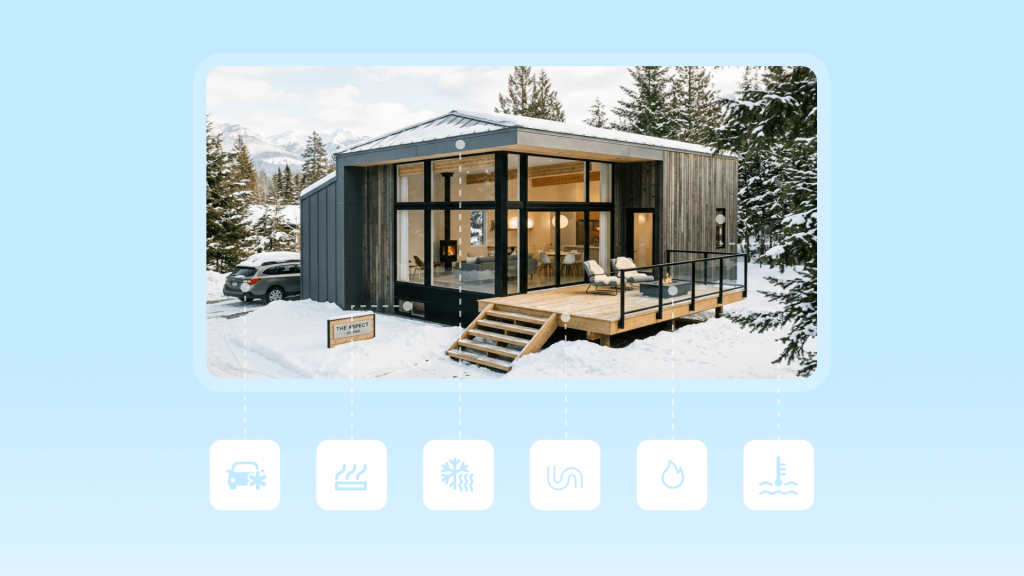
Knowing how to winterize a vacation rental is essential for protecting plumbing, heating systems, and exterior features before freezing weather arrives. A guest checks out on Sunday, the cleaner locks the door, and the property sits empty for two weeks. Then temperatures drop, a pipe in an unheated crawl space freezes, and the resulting damage goes unnoticed until someone returns.
Burst pipes are one of the most common causes of property damage during freezing weather, according to the Insurance Institute for Business and Home Safety (IBHS), cited by Consumer Reports. Vacation rentals can face additional exposure because properties may sit vacant between bookings, leaving nobody there to notice a heating problem, draft, or plumbing issue.
Winterizing means preparing the property before freezing weather to reduce the risk of frozen pipes, heating failures, and cold-weather damage. The checklist below covers the main areas to address and when to handle them.
A Winterizing Timeline for Every Part of Your Rental
Work through these systems before freezing weather arrives. Start with the areas most vulnerable to temperature drops, then move on to heating and exterior maintenance.
Plumbing: Drain, insulate, and drip before the freeze
Pipes are particularly vulnerable when temperatures fall below 20°F, especially in unheated or poorly insulated spaces. These can include basements, crawl spaces, attics, garages, and cabinets along exterior walls. Freezing can also occur at higher temperatures depending on the pipe’s location, insulation, and exposure.
Use this sequence to prepare the plumbing:
- Find exposed pipes. Check the crawl space, attic, garage, basement, and plumbing beneath sinks on exterior walls. Make a note of vulnerable areas so you can check them again when freezing weather is forecast.
- Insulate exposed pipes. Use appropriately sized foam pipe insulation and follow the manufacturer’s installation instructions. For particularly vulnerable pipes, use a pipe-heating cable designed for the specific installation and follow its safety requirements.
- Shut off and drain exterior faucets. If an outdoor faucet has an indoor shut-off valve, close it, open the exterior faucet, and allow the line to drain. An insulated faucet cover can provide additional protection.
- Disconnect garden hoses. Drain and store them before freezing weather. Water left in a connected hose can freeze and damage the hose bib or connected plumbing.
- Protect pipes during severe cold. Keep cabinets beneath sinks open when appropriate so warm indoor air can reach vulnerable plumbing. If an exposed pipe is at risk, allowing a cold-water faucet served by that line to drip slowly can keep water moving through the pipe.
- Consider a full shutdown for seasonal closures. If the property will remain closed for an extended period, winterization may involve shutting off the main water supply and draining the plumbing system. Because procedures vary by property and equipment, have a qualified plumber handle a full system blowout or other specialized winterization when needed.
Complete the inspection and insulation work before your area’s first sustained freeze, then recheck vulnerable areas whenever freezing weather is forecast.
Thermostat: Set a floor that protects empty rooms
ال American Red Cross recommends keeping the thermostat at no lower than 55°F when you are away from home during cold weather. This gives an empty vacation rental a practical minimum temperature for freeze protection, although the appropriate setting can vary depending on the building, plumbing layout, insulation, and local conditions.
For an occupied home, the U.S. Department of Energy recommends starting around 68–70°F and notes that lowering the thermostat by 7–10°F for at least eight hours a day can reduce heating and cooling costs. For an unattended rental during freezing weather, however, preventing frozen pipes should take priority over a standard energy-saving setback.
A smart thermostat makes remote monitoring easier. You can check the property’s temperature and receive alerts when conditions change, or the heating system stops working. Hostex can connect with smart-home integration partners such as جيرفيس, which supports thermostat management alongside other connected devices. This can help you monitor the property between stays without relying on someone to check the thermostat manually.
Heating system: Test it before you need it
A heating system failure during a cold spell can quickly become a serious problem for a vacant rental. Test the system before the heating season starts, while there is still time to arrange repairs or servicing.
- Replace the air filter. Install a clean filter before the heating season begins, following the equipment manufacturer’s recommendations.
- Run the heating system. Let it complete a full cycle. Listen for unusual sounds and check that the rooms are receiving heat as expected.
- Schedule professional servicing. Have a qualified technician inspect the furnace or boiler before the heating season. If the property has a gas fireplace or wood stove, arrange appropriate inspection and servicing for those systems as well.
- Test smoke and carbon monoxide alarms. The U.S. Environmental Protection Agency recommends carbon monoxide alarms on every level of the home and outside sleeping areas. Test alarms regularly and follow the manufacturer’s instructions for battery replacement and alarm replacement.
Schedule professional servicing before the heating season begins, particularly if contractors in your area tend to book up during colder months.
Exterior and grounds: Gutters, seals, and snow
Cold weather can also create problems outside the property. Handle these maintenance tasks before winter weather makes them harder to complete.
- Clean gutters and downspouts. Remove leaves and other debris so water can drain properly. In freezing conditions, blocked drainage can contribute to ice buildup and water intrusion.
- Check windows, doors, and exterior penetrations. Seal obvious gaps around windows, doors, and places where pipes or utilities enter the building. This can reduce drafts and unnecessary heat loss.
- Arrange snow and ice removal. Decide who will clear snow from walkways, entrances, and driveways. If you manage the property remotely, arrange a local contractor before the first major storm and put access requirements in writing for guests.
- Prepare outdoor equipment. Bring outdoor furniture inside or protect it according to the manufacturer’s instructions. Winterize pools, hot tubs, irrigation systems, and other outdoor equipment according to their specific requirements.
Complete exterior preparation in early fall or before the first period of sustained winter weather, depending on your local climate.
How Much Does It Cost to Winterize a Vacation Rental?
Winterizing costs vary significantly by property, climate, equipment, and local labor rates. Many preventive tasks are relatively inexpensive, while a frozen or burst pipe can result in thousands of dollars in water damage.
| Item | Typical cost range |
|---|---|
| Foam pipe insulation | A few dollars per linear foot |
| Insulated faucet cover | $3–$15 each |
| Furnace or boiler inspection | $80–$200 |
| Carbon monoxide alarm | $20–$50 per unit |
| Snow removal contract | Varies by region and driveway length |
| Burst pipe repair | $5,000–$10,000 or more |
The repair range comes from IBHS estimates cited by Consumer Reports. These are representative figures, not quotes.
How to Turn the Checklist Into Tasks That Actually Get Done
A winterizing checklist only works when each task has a clear owner and deadline. For a single property you manage yourself, a simple checklist may be enough. With multiple properties, cleaners, and contractors, it becomes easier to lose track of seasonal work.
Turn each item into a task with three basic fields:
- who is responsible
- when it is due
- whether it is complete.
Assign plumbing checks, heating maintenance, exterior preparation, and snow removal to the appropriate people, then set deadlines based on your local winter weather.
Hostex can manage these tasks within the platform. Its task management tools help create cleaning and maintenance tasks, notify team members, and track expenses associated with jobs. You can also use recurring tasks for maintenance that needs to happen every year, such as furnace filter replacement or gutter cleaning.

For a broader maintenance routine that covers the whole year, see our vacation rental maintenance guide.
What to Tell Guests Before a Winter Arrival
Guests should know about any winter-specific instructions before they arrive. Clear guidance helps them avoid actions that could create problems during a cold-weather stay.
Include these points in your pre-arrival information:
- Thermostat expectations. Tell guests the minimum temperature you require and ask them not to lower the thermostat below it.
- Exterior doors. Ask guests to keep exterior doors closed and report unusual drafts, cold areas, or heating problems.
- Emergency contact. Give them one clear contact method for reporting a heating failure, frozen pipe, leak, or other urgent issue.
- Snow and parking instructions. Explain where guests should park and whether they need to keep specific areas clear for snow removal.
- Hot tub or pool rules. If the property has these amenities, provide any winter operating or maintenance instructions guests need to follow.
Hostex lets you deliver this information through the guest portal, giving guests one place to find property instructions. You can also use الرسائل المحفزة to send winter-specific instructions automatically before applicable check-ins.
التعليمات about Winterizing a Vacation Rental
How long can a rental sit empty before pipes are at risk?
There is no universal number of safe empty days. The risk depends on temperature, pipe location, insulation, and whether the property remains heated. Pipes are particularly vulnerable below 20°F, but freezing can occur at higher temperatures under some conditions.
What temperature should I set when the rental is empty?
The American Red Cross recommends keeping the thermostat at no lower than 55°F when you are away during cold weather. This is a general minimum recommendation, not a guarantee that every property will be protected from freezing.
What if a guest turns the heat down anyway?
Set the minimum temperature expectation in writing before check-in. If you use a smart thermostat with remote monitoring, you can check the property’s temperature and respond if it falls below your chosen threshold.
Does insurance cover a frozen burst pipe?
It depends on the policy and the circumstances of the loss. Some short-term rental insurance policies may cover water damage from a burst pipe, while exclusions or conditions can apply to vacant properties or inadequate maintenance. Review your policy before winter and ask your insurer about any requirements for unoccupied periods. Our short-term rental insurance guide covers the main areas to review.
Do warm-climate rentals need to winterize?
Homes in warmer regions can still have vulnerable plumbing when an unusual freeze occurs. Monitor local weather forecasts, protect exposed pipes, know where the main water shut-off valve is, and follow local guidance when freezing temperatures are expected.
What can a PMS automate for winter?
A PMS can help organize recurring maintenance tasks, guest messages, and operational records. Hostex can schedule recurring winter preparation tasks, send pre-arrival instructions automatically, and track expenses associated with maintenance work. Your main shut-off valve is.
What can a PMS automate for winter?
Tasks, messages, and reports. Hostex can schedule the recurring winterizing tasks, send pre-arrival instructions automatically, and track what each winter prep job costs.

 Arabic
 English
 Japanese
 Spanish
 French
 Russian
 German
 Portuguese
 Korean
 Italian
 Thai