

Die Entscheidung, haustierfreundliche Ferienunterkünfte anzubieten, ist heute eine der praktischeren Entscheidungen, vor denen ein Airbnb-Gastgeber steht.
Einerseits wird die Nachfrage von Haustierbesitzern sichtbarer und konsistenter über Kurzzeitvermietungsplattformen. Immer mehr Reisende bringen Haustiere mit und filtern gezielt nach Unterkünften, die diese erlauben. Andererseits bringt die Aufnahme von Haustieren echte Nachteile mit sich. Dazu gehören zusätzlicher Reinigungsaufwand, ein höheres Risiko für Abnutzung und strengere tägliche Managementregeln.
Dieser Leitfaden analysiert die tatsächliche Entscheidung hinter haustierfreundlichen Ferienunterkünften. Sie erfahren, wann es sinnvoll ist, Haustiere zu erlauben, welche Risiken Sie erwarten können und wie erfahrene Gastgeber ihre Haustierrichtlinien im echten Betrieb gestalten.
Warum haustierfreundliche Ferienunterkünfte funktionieren
Schauen wir uns an, was die Daten und das tatsächliche Buchungsverhalten bei haustierfreundlichen Ferienunterkünften wirklich nahelegen.
Auf Kurzzeit-Vermietungsplattformen erzielen haustierfreundliche Unterkünfte oft eine höhere Auslastung und eine bessere Buchungskonversionsrate. Die genaue Lücke hängt vom Standort und dem Immobilientyp ab. Der Trend ist jedoch konsistent genug, dass viele Gastgeber die Aufnahme von Haustieren inzwischen eher als Preis- und Nachfragefaktor denn als Lebensstilentscheidung betrachten. In vielen Fällen sorgen Haustiergebühren zudem für eine kleine, aber stabile Steigerung des Gesamtumsatzes.
Nachfragemuster unterstützen diesen Wandel ebenfalls. Google Trends zeigt in den letzten Jahren ein anhaltendes Interesse an haustierfreundlichen Ferienunterkünften. Auf großen Buchungsplattformen ist der Filter für Haustiere zu einem Standard-Suchverhalten geworden. Dies ist besonders häufig bei reisenden Familien und Langzeitgästen zu beobachten. Für viele von ihnen ist die Haustierrichtlinie der entscheidende Faktor noch vor dem Preis oder der Ausstattung.
Es gibt nach der Buchung auch einen verhaltensspezifischen Unterschied. Haustierbesitzer neigen dazu, im Durchschnitt länger zu bleiben. Sie kehren außerdem mit größerer Wahrscheinlichkeit zurück, wenn der Aufenthalt für ihre Haustiere gut verläuft. In der Praxis kann dies einen guten haustierfreundlichen Aufenthalt ohne zusätzlichen Marketingaufwand in wiederkehrende Buchungen verwandeln.
Allerdings gehen diese Vorteile mit klaren Kompromissen einher. Vermieter berichten regelmäßig über einen höheren Reinigungsaufwand und ein erhöhtes Risiko für Abnutzung und Verschleiß. Schäden durch Haustiere sind keine Seltenheit und sollten als Teil des Geschäftsmodells einkalkuliert werden. Gleichzeitig meiden einige Gäste haustierfreundliche Unterkünfte aufgrund von Allergien oder persönlichen Vorlieben. Dies ist ein bedeutendes Segment, das sich direkt auf Ihre gesamte adressierbare Nachfrage auswirkt.
Sollten Sie Haustiere in Ihrer Ferienunterkunft erlauben?
Nicht jede Immobilie eignet sich für haustierfreundliche Ferienunterkünfte. In der Praxis hängt die Entscheidung meist von mehreren operativen Faktoren ab, die sowohl das Risiko als auch das Gästeerlebnis beeinflussen.
1. Wie ist Ihre Bodensituation?
Teppichboden ist eine große Herausforderung mit Haustieren. Missgeschicke ziehen ein, Gerüche bleiben zurück und eine professionelle Reinigung wird schnell teuer. Harte Oberflächen wie Fliesen, Hartholz, Vinyl oder Laminat sind viel pflegeleichter. Wenn Sie nur in den Schlafzimmern Teppich haben, können Sie Haustiere immer noch erlauben, aber es hilft, klare Regeln aufzustellen, um Haustiere nach Möglichkeit von den Schlafbereichen fernzuhalten.
2. Haben Sie einen Außenbereich?
Ein eingezäunter Garten ist einer der größten Vorteile für eine Haustier-freundliche Unterkunft. Gäste schätzen es, ihren Hund einfach rauslassen zu können, ohne jedes Mal anleinen zu müssen. Sogar eine kleine Terrasse oder ein Balkon bietet einen Mehrwert, besonders in städtischen Gebieten, wo Freiflächen für Haustiere in der Nähe rar sind.
3. Was sagt Ihre Versicherung?
Einige Haftpflichtversicherungen für Gastgeber schließen Schäden durch Haustiere aus oder enthalten Rassenbeschränkungen. Prüfen Sie immer Ihren Versicherungsschutz, bevor Sie Ihre Unterkunft als haustierfreundlich inserieren. AirCover für Gastgeber von Airbnb bietet zwar einen gewissen Schutz, aber dieser ist begrenzt. Achten Sie genau auf die spezifischen Bedingungen in Bezug auf Haustierschäden.
4. Kann Ihre Reinigungskraft das übernehmen?
Tierhaare nehmen deutlich mehr Zeit für die Reinigung in Anspruch. Bei Missgeschicken sind enzymatische Reiniger anstelle von herkömmlichen Oberflächensprays erforderlich. Wenn Ihre Reinigungsfirma für haustierfreundliche Übergaben einen Aufpreis verlangt, berücksichtigen Sie diesen in Ihrer Preisstruktur. Eine Reinigungskraft, die nicht gerne mit Tierhaaren umgeht, arbeitet mit der Zeit möglicherweise schlampig, was sich auf die Gästebewertungen auswirken kann.
5. Wer sind Ihre Nachbarn?
Wenn Sie sich Wände teilen oder unter einer Wohnungs- oder Hausbesitzervereinigung (HOA) leben, überprüfen Sie die Regeln sorgfältig. Viele Eigentümergemeinschaften und Apartmentgebäude schränken Haustiere nach Größe, Rasse oder Anzahl ein. Lärm ist ebenfalls ein Faktor. Nachbarn werden einen bellenden Hund spät in der Nacht nicht schätzen. Ein freistehendes Einfamilienhaus ist im Allgemeinen die einfachste Konstellation für die Haltung von Haustieren.
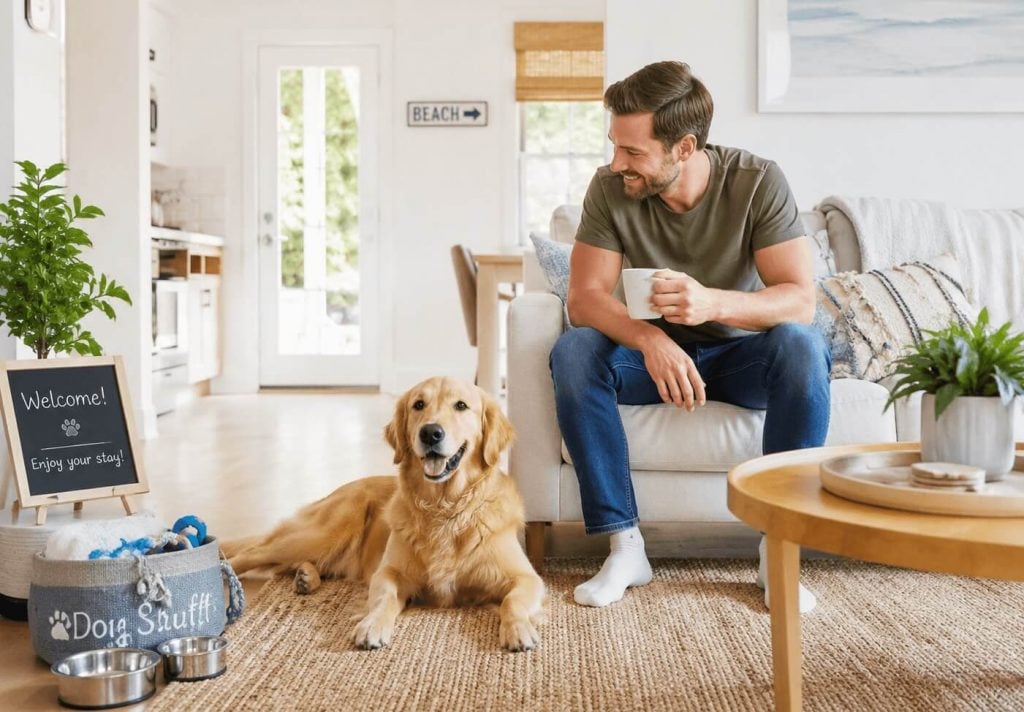
Wie man sich vorbereitet Ihre Ferienunterkunft für Haustiere
You can’t supervise guests and their pets around the clock, but a thoughtful vacation rental setup can help prevent accidents, protect your property, and make pet-friendly stays easier to manage.
1. Gefährliche Gegenstände entfernen oder sichern
Zimmerpflanzen, Reinigungsprodukte, Medikamente und kleine Gegenstände können alle zu Gefahren werden.
Lagern Sie Chemikalien in verschlossenen Schränken oder auf hohen Regalen. Viele häufige Pflanzen sind für Haustiere giftig, darunter Lilien, Aloe vera, Efeutute und Bogenhanf. Entfernen Sie sie oder stellen Sie sie völlig außer Reichweite.
2. Schützen Sie Ihre Möbel
Erwägen Sie nach Möglichkeit die Verwendung von waschbaren Schonbezügen für Sofas und Sessel.
Möbel aus Leder oder Kunstleder sind pflegeleichter als Stoff. Wenn Sie teure Teppiche haben, sollten Sie diese während des Aufenthalts von Haustieren eventuell einlagern. Einen beschädigten Teppich zu ersetzen, ist oft weitaus teurer als die temporäre Einlagerung.
3. Erstellen Sie ein Haustier-Willkommenskit
Diese kleine Investition zahlt sich durch besseres Verhalten der Gäste und bessere Bewertungen aus. Stellen Sie ein einfaches Kit zusammen mit:
- Alte Handtücher für Haustiere (klar getrennt von Gästetüchern)
- Eine Fusselrolle
- Müllsäcke
- Futternapf und Wassernapf aus Edelstahl
- Eine Liste von Tierärzten, Tierhandlungen und Hundeparks in der Nähe
- Ein grundlegender Leitfaden für Erste Hilfe bei Haustieren, einschließlich Informationen der Giftzentrale der ASPCA
Gäste bemerken diesen Aufwand. Es signalisiert, dass Haustiere wirklich willkommen und nicht nur geduldet sind.
4. Bestimmte Haustierbereiche einrichten
Wenn Sie einen Außenbereich haben, richten Sie einen bestimmten Bereich für das Geschäft ein.
Stellen Sie ein kleines Schild auf oder nutzen Sie die Gartengestaltung, um den Platz zu definieren. Stellen Sie eine Müllstation mit Tüten und einem abgedeckten Eimer bereit. Je leichter Sie es den Gästen machen, das Richtige zu tun, desto wahrscheinlicher werden sie es tun.
5. Smart Monitoring Tools installieren
Lärmmonitore können helfen, übermäßiges Bellen frühzeitig zu erkennen und Beschwerden von Nachbarn zu verhindern.
Innenkameras sind in Ferienwohnungen nicht zulässig. Jedoch, Außenkameras und Lärmsensoren sind zulässig, wenn sie ordnungsgemäß offengelegt werden.
Diese Tools helfen Ihnen, frühzeitig zu reagieren, bevor kleine Probleme zu ernsthaften Schwierigkeiten werden.
So erstellen Sie Haustierrichtlinien für Ihre Ferienunterkunft
Eine vage Haustierrichtlinie ist schlimmer als gar keine Richtlinie. Gäste müssen genau wissen, was erlaubt ist und was nicht. Eine klare Struktur reduziert Missverständnisse und verhindert vermeidbare Streitigkeiten. Hier ist, was eine solide Haustierrichtlinie beinhalten sollte.
1. Erlaubte Haustierarten
Seien Sie von Anfang an konkret. Sagen Sie nicht einfach “Haustiere willkommen”. Definieren Sie stattdessen klar, wie zum Beispiel nur Hunde oder nur Hunde und Katzen.
Wenn Sie andere Tiere wie Vögel oder Kaninchen erlauben, geben Sie dies ausdrücklich an. Viele Gastgeber beschränken Haustiere auch nach Gewicht, wie zum Beispiel auf unter 50 oder 30 Pfund. Dies ist sowohl vernünftig als auch in der Branche weit verbreitet.
2. Anzahl der Haustiere
Setzen Sie immer ein klares Limit. Ein Hund oder maximal zwei Hunde sind typisch.
Die Abrechnung pro Haustier anstelle einer pauschalen Gebühr für “unbegrenzte Haustiere” fördert zudem die Ehrlichkeit. Gäste geben die genaue Anzahl der Tiere eher an, wenn sich der Preis nach jedem einzelnen Haustier richtet.
3. Rassenbeschränkungen
Dies mag ein sensibler Bereich sein, ist aber in der Ferienhausverwaltung nach wie vor üblich, was oft auf Versicherungsanforderungen zurückzuführen ist.
Wenn Ihre Richtlinie bestimmte Rassen ausschließt, listen Sie diese in Ihrer Hausordnung deutlich auf. Verstecken Sie diese Information nicht nach der Buchung. Transparenz schützt sowohl Sie als auch den Gast.
4. Haustiergebühren-Struktur
Sie haben im Allgemeinen drei Hauptpreismodelle:
- Pauschale Haustiergebühr: Eine einmalige Gebühr pro Aufenthalt. In der Regel zwischen $25 und $100, je nach Größe der Unterkunft und Aufenthaltsdauer.
- Haustiergebühr pro Nacht: In Hotels häufiger anzutreffen. In Ferienwohnungen eher selten. In der Regel $10 bis $25 pro Haustier und Nacht.
- Rückzahlbare Kaution für HaustiereWird im Voraus erhoben und nach dem Check-out erstattet, wenn kein Schaden festgestellt wird.
Die meisten Gastgeber von Ferienunterkünften bevorzugen eine pauschale Haustiergebühr, weil sie einfach und leicht zu verstehen ist.
5. Hausordnung für Haustierbesitzer
Dein Hausregeln sollte einfach, verständlich und durchsetzbar sein:
- Haustiere müssen in einer Transportbox untergebracht werden, wenn sie allein in der Unterkunft gelassen werden.
- Haustiere sind auf Möbeln oder Betten nicht erlaubt, es sei denn, es ist ausdrücklich gestattet.
- Gäste müssen den Kot ihrer Haustiere selbst beseitigen und ordnungsgemäß entsorgen
- Übermäßiges Bellen, das die Nachbarn stört, ist nicht erlaubt.
- Haustiere müssen in gemeinschaftlichen oder allgemeinen Bereichen an der Leine geführt werden.
- Gäste haften für alle durch Haustiere verursachten Schäden
- Haustiere sollten aktuellen Schutz vor Flöhen und Zecken haben
6. Assistenzhunde und emotionale Unterstützungstiere
Hier geraten viele Gastgeber in Verwirrung.
In den Vereinigten Staaten gelten Assistenztiere laut Gesetz nicht als Haustiere. Sie können keine Haustiergebühren für Assistenztiere erheben und Sie können eine Buchung nicht wegen ihnen ablehnen. Die Richtlinien von Airbnb entsprechen im Allgemeinen den ADA-Anforderungen in den USA.
Emotional Support Animals sind etwas anderes. In vielen Fällen behandelt Airbnb sie nicht genauso wie Assistenzhunde. Dies kann es Gastgebern ermöglichen, je nach örtlichen Vorschriften und Plattformregeln Haustiergebühren zu erheben.
Die Regeln variieren jedoch je nach Region. Überprüfen Sie vor dem Festlegen von Einschränkungen stets die lokalen Gesetze und die neuesten Plattformrichtlinien.

Wie man eine haustierfreundliche Ferienunterkunft vermarktet
Sobald Ihre Hausordnung und Haustierrichtlinie bereit sind, ist der nächste Schritt die Sichtbarkeit. Sie müssen sicherstellen, dass Haustierbesitzer Ihr Inserat tatsächlich finden und ihm vertrauen können.
1. Optimieren Sie Ihr Inserat für Haustierbesitzer
Einschließen “haustierfreundlich” in Ihrem Anzeigentitel wenn es sich natürlich liest.
In Ihrem Beschreibung, gehen Sie über eine einfache Aussage hinaus. Anstatt nur zu sagen, dass Haustiere erlaubt sind, beschreiben Sie das echte Erlebnis:
- Eingezäunter Garten für sichere Zeit im Freien
- Hundepark oder Spazierweg in der Nähe
- Haustier-Willkommenspaket in der Unterkunft vorhanden
Das funktioniert besser als eine Checkliste. Es hilft Gästen, sich den Aufenthalt vorzustellen, was die Conversion verbessert.
2. Verwenden Sie Fotos, die haustierfreundliche Unterkünfte signalisieren
Fügen Sie ein paar Bilder hinzu, die Ihre haustierfreundliche Einrichtung deutlich machen:
- Eingezäunter Hof oder Außenbereich
- Willkommenspaket für Haustiere
- Nahegelegener Wanderweg oder Grünfläche
Vermeiden Sie es, Haustiere auf Betten oder Sofas zu zeigen, wenn Ihre Regeln dies verbieten. Widersprüchliche Signale führen oft zu Missverständnissen und Streitigkeiten.
3. Aktivieren Sie die richtigen Platformeinstellungen
Stellen Sie sicher, dass auf Plattformen wie Airbnb, Vrbo und Booking.com der Filter “Haustiere erlaubt” aktiviert ist.
Sollten Sie Einschränkungen wie Gewichtsgrenzen oder Teilnehmerbegrenzungen haben, geben Sie diese bitte immer vor der Buchung in den Hausregeln an. Die Sichtbarkeit ist wichtiger als die genaue Platzierung.
4. Nutzen Sie auf Haustiere ausgerichtete Buchungskanäle (optional)
Wenn Sie zusätzliche Aufmerksamkeit wünschen, ziehen Sie Nischenplattformen in Betracht wie BringFido oder GoPetFriendly.
Diese Plattformen verzeichnen zwar ein geringeres Besucheraufkommen, weisen jedoch eine deutlich höhere Buchungsbereitschaft auf. Die meisten Nutzer planen bereits, mit Haustieren zu reisen.
5. Die Regeln in der Kommunikation mit Gästen bekräftigen
Ihre Mitteilungen sollten die Erwartungen bestätigen, ohne dabei streng zu klingen.
Zum Beispiel:
“Wir freuen uns darauf, Sie und Ihr Haustier bei uns begrüßen zu dürfen. Bitte lesen Sie vor Ihrer Ankunft die Haustierrichtlinien durch.”
Wenn Sie ein Immobilienverwaltungssystem wie Hostex, Sie können verschiedene Nachrichten für Buchungen mit und ohne Haustiere automatisieren. Dadurch bleibt die Kommunikation ohne zusätzlichen manuellen Aufwand einheitlich.
Verwaltung haustierfreundlicher Aufenthalte im täglichen Betrieb
Bei einer haustierfreundlichen Unterkunft geht es nicht nur um die Einrichtung. Sie wirkt sich auch auf den täglichen Ablauf aus, vom Check-in bis zum Check-out.
1. Vor der Ankunft
Senden Sie einige Tage vor dem Check-in eine Erinnerungsnachricht.
Bestätigen:
- Anzahl der Haustiere
- Art der Haustiere
- Gibt es besondere Anforderungen?
Falls bei der Buchung keine Gebühr für Haustiere erhoben wurde, bitten Sie vor der Ankunft um deren Zahlung. So lassen sich spätere unangenehme Gespräche vermeiden.
2. Während des Aufenthalts
Seien Sie für Fragen rund um Haustiere ansprechbar. Wo befindet sich die nächste Tiernotfallpraxis? Gibt es in der Nähe ein gutes, hundefreundliches Restaurant? Solche Fragen tauchen immer wieder auf, und Gastgeber, die schnell darauf reagieren, erhalten bessere Bewertungen.
Mit Ausgelöste Nachrichten Bei Hostex können Sie häufig gestellte Fragen zu Haustieren automatisch in Ihre Willkommensnachricht einfügen. So können Sie häufig gestellte Fragen wie die Regeln für Haustiere, die Entsorgung von Tierkot oder nahegelegene Auslaufgebiete bereits im Voraus beantworten. Dies reduziert sich wiederholende Fragen und sorgt dafür, dass die Gäste Ihre Erwartungen kennen.
Sie können außerdem aktivieren KI-gestützte Antworten um Gästeanfragen in Echtzeit zu bearbeiten. Das System nutzt die Angaben in Ihrem Inserat und frühere Unterhaltungen, um automatisch zu antworten, darunter auch Fragen zu Haustieren wie Tierärzte in der Nähe oder Hausregeln.
3. Abreise und Reinigung
Ihre Reinigungs-Checkliste sollte auch Aufgaben enthalten, die speziell auf Haustiere zugeschnitten sind:
- Gründliches Staubsaugen von Sofas und unter Möbeln
- Überprüfen Sie die Bettwäsche auf Tierhaare
- Hartböden desinfizieren
- Den Hof auf Abfälle untersuchen
- Nach Kratzern oder Bissschäden suchen
Wenn Sie ein Ferienunterkunft-Verwaltungssystem wie Hostex, lässt sich die Reinigung teilweise automatisieren. Sie kann Reinigungsaufgaben für jede Buchung und fügen Sie eine Checkliste bei, je nachdem, ob Haustiere mituntergebracht sind. Sobald der Gast auscheckt, benachrichtigt das System automatisch Ihre Reinigungskraft.

Häufige Fehler, die Gastgeber von haustierfreundlichen Ferienunterkünften machen
Dies sind die Fehler, die am häufigsten den Gewinn mindern oder das Risiko erhöhen.
1. Keine Haustiergebühr
Manche Gastgeber glauben, dass sie durch den Verzicht auf die Haustiergebühr mehr Buchungen anziehen können. Das mag sein. Aber Sie lassen Geld auf dem Tisch liegen und decken Ihre tatsächlichen Kosten nicht. Allein die zusätzliche Reinigung rechtfertigt bereits eine Gebühr.
2. Unklare oder fehlende Haustierregeln
Bringt ein Gast drei große Hunde in eine Unterkunft, bei der Haustiere erlaubt sind, wessen Schuld ist es? Wenn Sie kein Limit angegeben haben, ist es Ihres. Seien Sie präzise in Ihren Regeln.
3. Das Vernachlässigen der Flohprophylaxe
Flöhe können ein Objekt innerhalb von Tagen befallen. Verlangen Sie, dass Haustiere mit Flohschutz behandelt werden, und erwähnen Sie dies in Ihren Regeln. Ein Flohbefall kostet mehr als jede Haustiergebühr, die Sie in einem Jahr einnehmen werden.
4. Mangelhafte Reinigungsdisziplin
Wenn Ihre Reinigungskraft denselben Staubsauger für Unterkünfte mit und ohne Haustiere verwendet, ohne ihn zu leeren, verteilen Sie Tierhaare an jeden Gast. Schulen Sie Ihr Team und stellen Sie die richtige Ausrüstung zur Verfügung.
5. Vergessen Allergieempfindlichkeit
Auch wenn Sie Haustiere erlauben, haben einige Gäste schwere Allergien. Führen Sie zwischen Aufenthalten mit Haustieren eine Grundreinigung durch. Verwenden Sie nach Möglichkeit HEPA-Filter in Ihrem HVAC-System. Erwägen Sie den Einsatz eines Luftreinigungssystems.
6. Jede Buchung ohne Prüfung annehmen
Nicht jede Haustieranfrage passt; Sie können und sollten eine Vorauswahl treffen. Wenn die Kommunikation eines Gasts Warnsignale auslöst oder seine Hunderassenhistorie zu Schadensansprüchen an Ihrem Eigentum passt, können Sie ablehnen. Sie führen ein Geschäft.
Häufig gestellte Fragen zu haustierfreundlichen Ferienunterkünften
Verdienen haustierfreundliche Ferienunterkünfte wirklich mehr Geld?
Branchendaten zeigen im Allgemeinen, dass haustierfreundliche Unterkünfte tendenziell eine höhere Auslastung erzielen, oft etwa 10 bis 20 Prozent über vergleichbaren nicht haustierfreundlichen Objekten.
Hinzu kommt, dass die Gebühren für Haustiere in der Regel zwischen $25 und $100 pro Aufenthalt liegen, was für zusätzliche Einnahmen sorgt. Der finanzielle Vorteil besteht jedoch nur dann, wenn die Preisgestaltung ausgewogen ist und betriebliche Risiken wie Reinigungsaufwand und Schäden angemessen kontrolliert werden.
Was ist eine angemessene Haustiergebühr?
Die meisten Vermieter von Ferienwohnungen erheben eine pauschale Haustiergebühr zwischen $25 und $100 pro Aufenthalt.
Manche Unterkünfte berechnen eine Gebühr pro Haustier, während bei gehobenen Angeboten in stark frequentierten Tourismusregionen die Preise über $100 oder sogar $150 liegen können. Entscheidend ist nicht die genaue Zahl, sondern ob sie den zusätzlichen Reinigungsaufwand und mögliche Abnutzungserscheinungen realistisch abdeckt.
Kann ich Begleittiere ablehnen?
In den Vereinigten Staaten und vielen anderen Regionen sind Assistenztiere gesetzlich geschützt und dürfen nicht wie Haustiere behandelt werden. Sie dürfen keine Haustiergebühren erheben oder eine Buchung wegen eines Assistenztiers ablehnen.
Sie dürfen nur zwei zulässige Fragen stellen: ob das Tier aufgrund einer Behinderung erforderlich ist und welche Aufgabe das Tier trainiert ist zu erfüllen. Sie können keine Details über die Behinderung selbst erfragen.
Sollte ich Katzen in meiner Ferienunterkunft erlauben?
Katzen können in manchen Fällen anspruchsvoller sein als Hunde. Die Geruchsentfernung, insbesondere bei Urinunfällen, ist oft schwieriger und kostspieliger. Darüber hinaus sind Katzenallergien tendenziell häufiger und bei bestimmten Gästen schwerwiegender.
Aus diesem Grund entscheiden sich viele Gastgeber dafür, nur Hunde zu erlauben. Wenn Sie Katzen akzeptieren, lohnt es sich, in enzymatische Reiniger und Luftreinigung zu investieren, um das langfristige Risiko zu verringern.
Was passiert, wenn ein Gast ein nicht angemeldetes Haustier mitbringt?
Ein nicht gemeldetes Haustier ist ein klarer Verstoß gegen Ihre Hausregeln. Der erste Schritt besteht darin, über das Nachrichten-System der Plattform zu kommunizieren und sich direkt auf Ihre Richtlinie zu beziehen.
Sie können die entsprechende Haustiergebühr verlangen oder, in schwerwiegenderen Fällen, das Problem zur Unterstützung über die Plattform eskalieren. Halten Sie die Kommunikation stets innerhalb der Buchungsplattform, um eine ordnungsgemäße Dokumentation sicherzustellen.
Wie geht man damit um, wenn ein Schaden entsteht?
Wenn Sie nach dem Check-out Schäden feststellen, dokumentieren Sie alles sofort mit klaren Fotos. Dazu gehören Kratzer an Möbeln, Flecken auf der Bettwäsche oder Anzeichen von Kauen. Eine starke Dokumentation ist die Grundlage für jeden erfolgreichen Schadensersatzanspruch.
Melden Sie das Problem dann über das Streitbeilegungszentrum der Plattform und bewahren Sie alle Reparatur- oder Reinigungsbelege auf. In den meisten Fällen reagieren Gäste vernünftig, wenn die Beweise eindeutig sind, insbesondere bei berechtigten Schäden durch Haustiere.
Mit der Zeit hilft Ihnen die Verfolgung dieser Fälle dabei, Ihre Haustierrichtlinie zu verfeinern. Möglicherweise erkennen Sie Muster, wie etwa unklare Regeln oder bestimmte Buchungsarten, die ein höheres Risiko bergen. In der Praxis sind echte Vorfalldaten bei der Anpassung von Gebühren oder Einschränkungen oft nützlicher als Annahmen.


 German
  English
  Japanese
  Spanish
  Arabic
  French
  Russian
  Portuguese
  Korean
  Italian
  Thai
Thai