
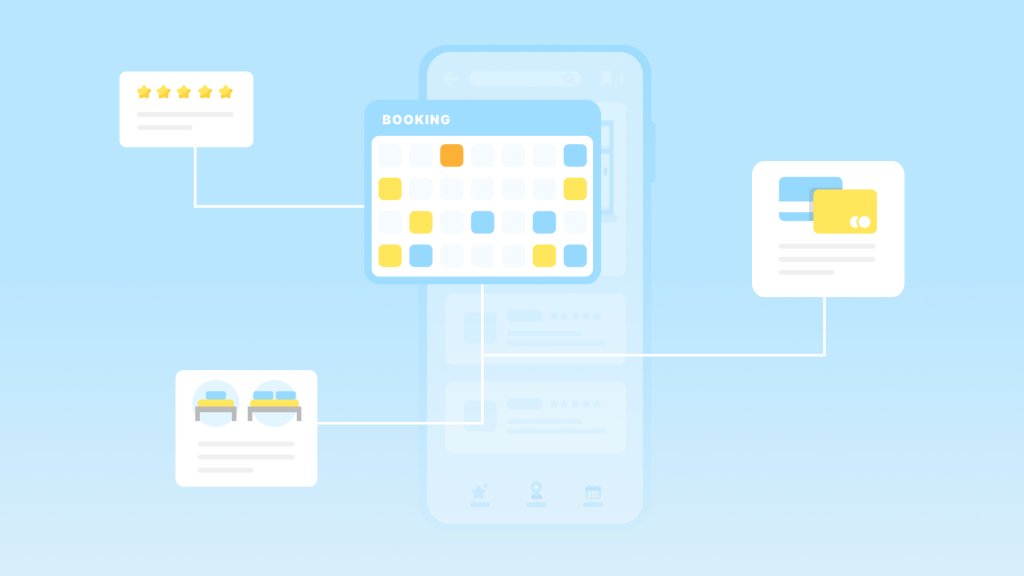
You want to increase direct bookings, but “post more often” is not much of a marketing plan. A campaign needs a particular audience, a reason to travel, and a booking opportunity you can actually deliver.
The five campaigns below are designed for hosts who already have a working booking website. Each turns a different source of demand into a practical test. If the website or reservation process still needs setting up, begin with our guide to getting direct bookings.
Choose One Campaign Before Creating Content
Write a short brief: which property and dates you want to sell, who would value that stay, how you can reach them, and how much you are prepared to spend. Check availability and calculate whether the proposed price or perk leaves an acceptable contribution after relevant costs.
A campaign for a quiet midweek break needs a different audience from one selling a family holiday during school vacation. Avoid promoting every property to everyone with the same message. Use the options below to choose a specific starting point.
| Campaign | Useful starting condition | Preparation needed |
|---|---|---|
| Return-guest invitation | You have an independently acquired, permitted marketing audience | A relevant reason to return and suitable dates |
| Trip-focused social series | You can show a stay that matches an identifiable travel need | Original content and a matching property page |
| Local referral partnership | A nearby business serves travelers your property can accommodate | An agreed referral route and clear responsibilities |
| Specific-date offer | You have gaps that fit a viable guest segment | Accurate availability and fully costed offer terms |
| Limited paid test | Checkout works, and you can measure completed reservations | A defined audience, spending cap, and stopping rule |
5 Campaigns to Increase Direct Bookings
1. Send a Return-Guest Invitation With a Reason to Travel
For an independently acquired audience you are permitted to market to, choose a timely reason to return: an annual event, a different season, or a stay type that matches a previous preference. Check the event details before publishing them.
Build the message around one stay and one booking destination. For example, invite suitable subscribers to consider a midweek autumn break, show what makes that period appealing, and link to the relevant property and dates. A generic newsletter covering every property makes it harder to decide.
Do not assume an OTA reservation gives you permission to use guest details for marketing. Airbnb’s pricing and payment policy prohibits encouraging current, future, or repeat bookings off its platform; its guest-data rules also restrict how guest information is collected and used. This campaign is for an independently obtained audience whose use is permitted by applicable rules.
사용하세요 vacation rental email marketing guide for email structure and delivery, and the repeat booking guide for the wider retention program. Here, the decision is which return visit to promote and to whom.
2. Build a Social Series Around One Kind of Trip
Pick a guest question your property can answer with evidence: how a family would spend a rainy weekend, what a remote worker’s workspace looks like, or how guests reach a nearby attraction. Show the accommodation in that context rather than posting unrelated room photographs.
Plan a short sequence with a different purpose for each post: introduce the trip, demonstrate relevant features, and answer a practical booking question. Use accurate travel times, access information, and property details. Link to a page that continues the same offer instead of sending visitors to an unrelated homepage.
If you collaborate with a creator, agree on deliverables, permission to reuse the content, and how referrals will be recorded before providing a stay or payment. Follow applicable disclosure requirements. The social media marketing guide covers the broader channel strategy.
3. Create a Referral Route With a Local Partner
Look for a business whose customers already need the accommodation you offer: an event venue, activity provider, or relocation service, for example. Start by understanding their actual guest needs and timing, rather than asking every local business to display a generic flyer.
Agree on a simple route from recommendation to reservation. It might be a relevant page linked from the partner’s website or a referral code that guests can choose to use. Confirm who answers questions, whether anything is included, and how any referral compensation works. Do not imply a formal partnership before the other business agrees.
Review referred inquiries as well as bookings. Repeated questions about unsuitable group sizes or unavailable dates may mean the partner needs clearer information. Avoid collecting or exchanging customer contact lists as a shortcut.
4. Package a Specific Availability Gap
Start with the unsold dates and identify a guest who could realistically use them. A two-night gap, a week outside school holidays, and a monthly opening require different offers. Check minimum stays, servicing costs, and the effect on adjacent nights before publishing a promotion.
The offer can emphasize a genuine convenience or included benefit rather than a blanket discount. If you promise early arrival, confirm you can provide it; if it depends on availability, say so clearly. State eligible dates, the full price, cancellation terms, and any exclusions where the guest can see them before booking.
호텍스 직접 예약 사이트 supports promotional codes and booking-site tools. Confirm how your account applies an offer and test its final price before sharing it. A longer-stay campaign should also account for its operating and permission implications; use the mid-term rental strategy guide when that is the intended stay type.
5. Run a Paid Test With a Defined Limit
Choose a campaign only after you can follow a guest from the advertisement to an available stay and a completed booking. Specify the audience, destination page, maximum spend, and review point before launching. A small budget limits exposure; it does not establish whether a result is statistically reliable.
Use an advertisement that matches the landing page’s property, location, dates, and offer. If using a remarketing feature, confirm that your tracking, audience use, and required permissions comply with the advertising platform and applicable requirements. Do not upload an OTA guest list to create an advertising audience.
Pause and investigate if the booking path breaks or the campaign spends its agreed limit without the intended result. Clicks alone do not establish that advertising is worthwhile. Include refunds, cancellations, discounts, and fulfillment costs when reviewing the bookings it produces.
Review Results Before Repeating a Campaign
Give each campaign an identifier in your links or booking records where your tools support it. Keep a shared log of its audience, offer, dates, cost, and reservations. Use these comparisons:
- Response: Did the intended audience visit the relevant page or make suitable inquiries?
- Booking outcome: Which reservations remained after cancellations and refunds?
- 비용: What did advertising, partner compensation, discounts, and included benefits cost?
- Next decision: Which part must be continued, changed, or stopped?
Do not count a tracked reservation as proof of an additional booking. It may have happened without the campaign, or replaced a higher-value stay. Compare suitable date ranges and record other changes, such as seasonality or pricing, that could explain the result.
If every source produces visits but few booking starts, return to the direct booking journey guide to investigate the shared reservation path. More promotion may not solve that bottleneck.
자주 묻는 질문
Which campaign should a small host start with?
Choose the one for which you already have a suitable audience or a credible way to reach it. An empty mailing list cannot support a return-guest campaign, and an untested checkout is a poor foundation for paid traffic.
Should a direct offer always be cheaper?
No. Decide what the guest receives and what it costs you to provide it. A higher booking count can still leave less contribution if discounts and marketing expenses are too large.
Where does SEO fit into this plan?
SEO supports ongoing discovery; these campaigns coordinate a particular audience, stay, and offer. Use the vacation rental SEO guide for website search work rather than rebuilding that strategy for each promotion.
마지막 생각
When a freelancer, partner, or agency helps with marketing, agree who owns the photographs, campaign accounts, domain, and reporting access. A promotion can finish while its content and audience records remain valuable. Clear ownership and an agreed handover prevent a useful campaign from becoming impossible to repeat when a collaborator leaves.
 Korean
 English
 Japanese
 Spanish
 Arabic
 French
 Russian
 German
 Portuguese
 Italian
 Thai