
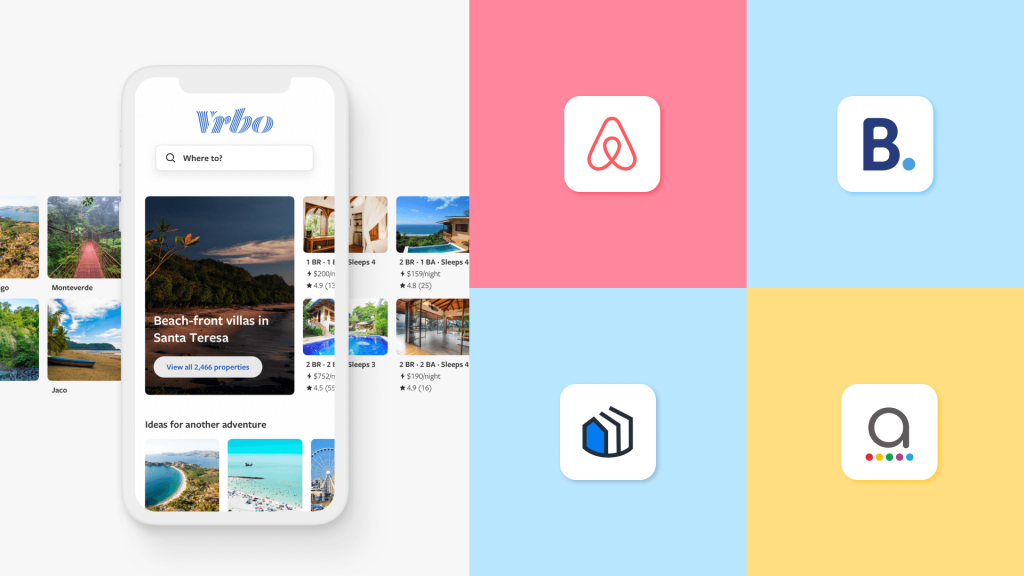
TL;DR: Vrbo alternatives and multi-channel distribution are essential for maximizing revenue. Data shows that listing on 3+ platforms increases RevPAR by 22% and achieves significantly higher occupancy than relying on Vrbo alone.
- Strategic Mix: Use Airbnb for unique stays, Booking.com for global business travel, and Expedia for high-value bundles.
- Algorithmic Edge: Diversifying bypasses Vrbo’s 90-day “cold-start” period, securing bookings much faster on alternative platforms.
- Profit Maximization: Build a direct booking site to eliminate 15% to 18% OTA fees and gain 100% ownership of guest data.
- Seamless Scaling: Use automation to sync calendars and messages in real time, reducing the manual workload by over 70%.
If you’re looking for an easy way to streamline your operations, consider using Hostex. This professional PMS automates over 70% of daily short-term rental tasks for just $4.9/month, giving you more time to focus on what matters most.

With a massive global footprint and over 2 million active listings, Vrbo remains a leading powerhouse in the vacation rental industry. However, it’s far from the only player in the game. Many other OTA platforms connect you with travelers seeking unique accommodations. Therefore, which Vrbo alternatives should you actually consider? Most importantly, how do you choose the right platform to reach a greater audience and increase occupancy rates?
In this guide, we’ll dive into the pros and cons of top competitors, including Airbnb and Booking.com. This deep dive will help you make informed decisions for starting your STR.
Why You Need Vrbo Alternatives
Data from AirDNA reveals that over 70% of professional hosts now list their properties across multiple platforms. These hosts achieve an average occupancy rate of 58.3%, significantly higher than that of those relying on a single channel. This highlights the core logic of modern short-term rental operations:
Diversifying risks + Targeting niche audiences = Maximizing revenue.
1. Break Free from Platform Over-Reliance
Every platform differs in traffic volume, commission structures, search algorithms, and host protection policies. As a result, hosts who depend solely on one channel are completely at the mercy of that platform’s rules. This creates a substantial business risk that could impact your bottom line overnight.
2. Overcome Algorithmic Limitations
New listings on Vrbo take an average of 90 days to fully enter the search recommendation pools. In contrast, Airbnb’s “cold-start” period for new listings is often as short as 45 days.
At a rate of $200 per night, this algorithmic gap could cost new hosts up to $8,400 in potential income during the first three months. Moreover, the algorithm often disadvantages smaller hosts. Compared to large property management companies, independent hosts frequently find themselves ranking lower in search results, making multi-channel distribution essential for visibility.
3. Reach Broader Traveler Demographics
Expedia Group’s 2025 research shows that 72% of Vrbo users are North American family travelers. While this is a lucrative market, the platform captures less than 20% of these other high-value groups:
- Business travelers: Spending $280+ daily.
- Digital nomads: With an average stay of over 14 days.
- International students: Providing stable demand during the off-season.
- Child-free young adults: Who often have more flexible vacation time.
By listing on multiple Vrbo alternatives, you expand your audience. In other words, each platform serves as a gateway to a different traveler demographic.
4. Dynamically Optimize Your Revenue
Practical data from PriceLabs shows that hosts using three or more platforms increase their annual RevPAR (Revenue Per Available Room) by 22%.
For instance, a platform charging 18% commission (3% higher than Vrbo) might convert 29% more business travelers. This ultimately results in a 12% higher ROI, meaning more profit in your pocket.
Managing these extra channels doesn’t have to be a headache. With tools like Hostex, managing multiple platforms becomes effortless. Specifically, its unified calendar automatically syncs all your listings, ensuring you stay organized and avoid the nightmare of double bookings.
How to Choose the Right Vrbo Alternative?
Choosing the right platform is not about finding a “Vrbo killer,” but about finding the right partner for your specific property type.
Here is a clear comparison of the major short-term rental platforms in 2026, based on the latest industry reports and market data:
| Platform | Target Audience | Average Daily Rate (ADR) | Commission Rate (Host) | Core Strengths | Key Drawbacks |
| Vrbo | Families & Groups | High | 5% + 3% payment fee | High-quality guests; entire homes only | Slow search ranking for new listings |
| Airbnb | Millennial & Solo travelers | Moderate | 15% to 15.5% (Host-only) | Massive traffic; best-in-class mobile app | High competition; strict guest-leaning policies |
| Booking.com | International & Business | Moderate to High | 15% (Typical) | Huge global reach; strong in urban areas | Complex backend; no built-in damage protection |
| Expedia | Traditional Vacationers | High | 10% to 20% | High visibility via flight/hotel bundles | Corporate feel; less focus on unique stays |
| Agoda | Asian Market Travelers | Moderate | 12% to 15% | Dominant in Asia-Pacific region | Limited footprint in North America |
| Google Vacation Rentals | Tech-savvy Searchers | High | 0% (Via connectivity partner) | Appears directly in Google Search/Maps | Requires a technical integration partner |
| Direct Site | Repeat Guests | Highest (No fees) | ~3% (Payment processing) | Total brand control; zero commission | Dominant in the Asia-Pacific region |
1. Airbnb Platform Analysis
Customer Profile
- Global reach: Over 1 billion global users, with 60% from Europe and North America.
- Age focus: 58% are young travelers aged 18-35.
- Key traits:
- High spending power: Prefer independent travel and cultural immersion. Two-thirds book trips 3+ times yearly.
- International diversity: English-speaking users dominate, but demand from Asia-Pacific and Latin America grows rapidly.
- Tech-savvy: 93% use mobile devices (mostly iOS), favoring smart home integrations.
Market Position
- Global dominance: Operates in 220+ countries/regions, holding 9.57% of the global short-term rental market.
- North America: 18% of global listings, highest density.
- Europe: Covers 67% of business travelers. Paris and London see over 30% market penetration.
- Asia-Pacific: Fastest-growing region (22% annual growth), driven by Japan and Southeast Asia.
- Revenue focus: 47% of total revenue comes from the US.
Core Advantages
- Operational flexibility: Hosts can freely set availability dates and maximum stays (e.g., 30-day limits) to avoid tenant-protection laws.
- Global traffic balances seasonal demand: Summer in the West and Lunar New Year/APAC holidays.
- Diverse guest base: Millennials (83%), business travelers ($280+ daily spend), and international tourists (22% APAC growth).
- Two-way review system: Filters quality guests. 95% of disputes are resolved via Airbnb support, prioritizing host protection.
- Upsell opportunities: Hosts offer hiking, cooking classes, etc., with 20% activity fees. Annual growth: 45%.
Key Risks & Challenges
- Cost pressures: Host service fees (10-15%) and regional payment fees (3.5% in APAC) cut into profits.
- Property damage risks: Occasional party incidents (e.g., stained floors, broken furniture). AirCover insurance covers only basic damages.
- Regulatory hurdles: Local bans on short-term rentals or high compliance costs (e.g., EU’s 15% short-term rental tax).
- Intense competition: 6 million+ global listings. New hosts face 45-day cold-start periods and 29% higher traffic costs vs. Booking.

2. Booking.com Platform Analysis
Customer Profile
- User demographics: 67% of users are aged 25-45, with 42% business travelers and 35% families. Most prefer mid- to high-end hotels, though demand for vacation rentals is rising.
- Regional focus:
- Core markets: North America and Europe dominate (62% localized searches).
- Growth areas: Asia-Pacific bookings surged 48% annually, driven by Southeast Asia.
Market Position
- Global reach: Operates in 220+ countries with 6M+ hotels and rentals.
- Regional shares: Europe (55%), North America (22%), Asia-Pacific (15%).
- Industry dominance: Leads global OTAs with 70% hotel bookings and 12% vacation rentals (growing 27% yearly).
Core Advantages
- Technology & efficiency:
- 98% of listings offer instant booking, boosting conversions by 19% vs competitors.
- Supports 40+ languages, with 63% non-English user conversion rates.
- Price competitiveness:
- Matches lowest prices (up to $50 refund for discrepancies).
- 70% of listings allow free cancellations 24-72 hours pre-arrival.
- Trust & loyalty:
- 58% of users book 3+ trips yearly.
- 120M+ verified reviews with 99.2% fake review detection accuracy.
- Ecosystem integration:
- 47% non-stay revenue from flights, car rentals, and activities.
- Partnerships with Marriott, Hilton, etc., enable shared loyalty benefits.
Key Risks & Challenges
- Vacation rental limitations:
- Only 12% of vacation rentals lack unique properties (e.g., treehouses).
- Family-focused audience (35%) shows low demand for niche listings.
- User diversity gaps:
- 67% of users aged 25-45; struggles to attract Gen Z (18-24).
- Over-reliance on Europe (55% share); low penetration in Latin America/Africa (<10%).
- Cost pressures:
- 18% vacation rental commissions exceed Vrbo (15%) and Airbnb (13-15%).
- High marketing costs (45% of expenses) squeeze profits.
- Algorithm bias: Underexposes listings in low-traffic destinations, discouraging host partnerships.

3. Expedia Platform Analysis
Customer Profile
- User demographics: Primarily targets 25-45-year-olds with $280+ daily spending. High-end listings achieve 23% higher RevPAR than market averages.
- Regional focus:
- US dominance: Contributes 60%+ revenue, with faster recovery in room nights.
- Asia-Pacific growth: Rising demand, but market penetration lags behind the US and Europe.
- Behavioral traits:
- Last-minute bookings: 68% of reservations occur within 7 days of travel. 89% use mobile devices.
- Price sensitivity: “Opaque booking” model (e.g., Hotwire) offers discounted rates to attract budget-conscious users.
Market Position
- Global reach:
- 36% OTA market share, with $110.9B total bookings in 2024. 88% revenue from lodging.
- Covers 220+ countries. Brands include Expedia, Hotels.com, and Vrbo. Added 1M urban apartments in Q4 2024.
- Financial performance:
- 2024 net profit: $1.234B. Adjusted EBITDA: $2.934B. Room nights recovered to 83% of 2019 levels.
- Segment breakdown:
- Airline bookings (4% revenue, 3% commissions).
- Lodging (70% revenue, 15% commissions).
- Vacation rentals (Vrbo) grew 27% YoY.
Core Advantages
- Multi-brand synergy: Integrates Expedia, Hotels.com, and Vrbo into a full-travel ecosystem. Cross-brand loyalty points boost repeat bookings.
- Supply chain control:
- Direct contracts with 880k hotels and 2M vacation rentals. Pandemic-era low-price inventory strategy secured market share.
- Egencia (corporate travel) revenue rose 21% in 2024.
- Content & traffic strategies:
- Launched “Travel Shops” (video creator partnerships), lifting conversions by 12%.
- One Key loyalty program and new-user discounts (e.g., $15 coupons) drove app downloads.
Key Risks & Challenges
- Brand fragmentation: Legacy multi-brand systems caused inefficiencies (e.g., Vrbo lacked loyalty integration). The unified backend in 2023 improved, but didn’t fully resolve issues.
- External competition: Airbnb dominates high-end vacation rentals. Booking’s 19% global share overshadows Expedia’s 12%.
- Regulatory costs: The EU’s 15% short-term rental tax and US state tax variations raised costs. 2024 tax expenses increased 23% YoY.

4. Agoda Platform Analysis
Customer Profile
- User demographics: Slightly more female users (driven by social media campaigns). Daily spending ranges $150-$300, favoring budget hotels and unique stays (e.g., treehouses, city apartments).
- Regional focus:
- Asia-Pacific core: 60%+ traffic from China, Japan, and South Korea. Top destinations: Thailand, Singapore, Hong Kong.
- Secondary markets: 30% of users in the US/Europe, mainly business travelers and backpackers.
- Behavioral traits:
- Price-sensitive: 78% use price alerts; 65% compare prices via Google Maps before booking.
- Mobile-first: 89% of bookings via mobile apps.
Market Position
- Global share: Holds 12% of the OTA market, trailing Booking (36%) and Expedia (24%). However, leads in Asia-Pacific with a 28% share.
- Inventory scale: 2.9M+ global listings, 45% in Asia-Pacific (including 100k city apartments).
- Group synergy: Part of Booking Holdings, sharing tech resources with Booking.com and Kayak, but operates independently to avoid brand overlap.
Core Advantages
- Simplified UX: Streamlined app interface reduced steps, boosting Gen Z retention by 12%.
- Search dominance: Integrates Google Maps price comparisons, prioritizing listings with “Book Now” buttons.
- Loyalty programs: Points redemption and free upgrades increase repeat bookings.
- Funding support: Launched a crowdfunding platform for premium listings, offering capital and branding upgrades.
Key Risks & Challenges
- Hidden fees: Automatic currency conversion (e.g., 5% fee on $2,000 orders) inflates costs.
- Prepaid model risks: Guaranteed bookings lock revenue but expose hosts to 25% income drops during oversupply.
- Cumbersome exits: Requires 30-day paperwork reviews; some hosts report post-termination charges.
- Consumer bias: Dispute resolutions favor guests, leaving hosts uncompensated for property damage.

Ultimate Recommendations: Choosing Your Vrbo Alternatives
Based on the core advantages and operational pain points of each platform, here are our targeted recommendations to help you find the perfect match for your property:
- Vrbo: Best for hosts targeting family travelers with whole-house rentals (villas or estates) or culturally themed properties like vintage stays and farmhouses.
- Airbnb: The go-to choice for global hosts offering unique stays and distinctive, personality-driven properties.
- Booking.com: An essential addition for hosts of business-oriented accommodations (city apartments or airport-adjacent stays) who prioritize high conversion rates and instant bookings.
- Expedia: Ideal for luxury resorts and extended-stay apartments looking to tap into high-end hotel and airline bundle resources.
- Agoda: A must-have for hosts targeting the Asia-Pacific market, specifically those operating budget-friendly urban guesthouses in regions like Japan, Korea, and Southeast Asia.
The Strategic Alternative: Your Direct-Booking Website
Instead of relying solely on OTA distribution channels, many savvy hosts are now building their own direct-booking websites. This allows you to bypass the middleman, connect directly with your guests, and take full control of your business operations.
This approach isn’t just about avoiding fees; it’s about building a sustainable brand for long-term growth. Here is why a direct site is often the best Vrbo alternative:
1. Zero Platform Commissions
You can completely avoid the 15% bite from Airbnb or the 18% commission from Booking.com. Consequently, 100% of the booking revenue stays in your pocket.
2. True Guest Ownership
When you own the platform, you own the data. You can track guest emails, preferences, and booking histories in-house. This allows you to send targeted offers that can boost repeat bookings by over 30%.
3. Policies That Work for You
You have the freedom to set your own rules. For example, you can implement specific minimum stay requirements or flexible cancellation terms without being forced to comply with rigid platform restrictions.
4. Freedom from Algorithmic Risks
On your own site, you don’t have to worry about Vrbo’s 90-day recommendation delays or maintaining Airbnb’s Superhost status just to stay visible. Your success is driven by your marketing, not a hidden code.
Pro Tip:
You can use Hostex’s Booking Site Builder to create your own professional website with just one click. It requires no coding knowledge and is completely free to set up. Additionally, listing your direct site on Google Vacation Rentals is a powerful way to drive high-quality organic traffic to your brand.

Multi-Platform Management Tactics
Of course, you can choose to list your property on multiple OTA channels while simultaneously operating your own direct-booking website. This multi-channel approach is the most effective way to maximize traffic and unlock your full booking potential.
Fortunately, there is absolutely no need to worry about an increased workload. In fact, professional tools like Hostex help you manage all platform listings through a single, centralized calendar. Moreover, its robust automation features handle over 70% of daily tasks, allowing you to focus on the high-level growth of your business.
Core Features for Efficient Scaling:
- Real-time Sync: Automatically sync your calendars, rates, and inventory across all OTAs and your personal website. This effectively eliminates double bookings and human errors caused by manual updates.
- Automated Messaging: Hostex supports instant inquiry responses, trigger-based guest messaging, and automated review management. This ensures consistent communication and high guest engagement without the manual effort.
- Dynamic Pricing Integration: Seamlessly connect with tools like PriceLabs to adjust your rates in real-time based on local market demand and seasonal trends.
- Performance Analytics: Generate detailed reports categorized by various dimensions. This data-driven approach allows you to identify and adjust strategies for any underperforming platforms.
Hostex empowers you to streamline your short-term rental management with a comprehensive suite of professional tools. By minimizing manual labor, you can achieve efficient, “hands-off” operations with minimal oversight, starting at just $4.9 per month.

Final Thoughts: Future-Proofing Your Rental Business
The landscape of the short-term rental industry is shifting. While Vrbo remains a cornerstone for many, the most successful hosts are those who refuse to put all their eggs in one basket. By exploring a mix of Vrbo alternatives, you are doing more than just chasing bookings. You are building a resilient, independent brand that can weather any platform’s algorithmic changes.
In short, diversification is the most effective hedge against uncertainty. The goal is to ensure that your property is visible wherever your ideal guest happens to be looking.
As you move forward, remember that the “best” platform is the one that aligns with your specific goals and property type. Start small, test new channels, and focus on the data. By taking control of your distribution strategy today, you are ensuring the long-term profitability and sustainability of your rental business for years to come.


 English
  Japanese
  Spanish
  Arabic
  French
  Russian
  German
  Portuguese
  Korean
  Italian
  Thai
Thai