
Double bookings are one of the fastest ways to lose revenue, damage your reputation, and risk penalties on Airbnb and Vrbo. Fortunately, they are also one of the most preventable problems in vacation rental management.
In this guide, you’ll learn how to avoid double bookings by understanding their most common causes, comparing manual calendar management, iCal sync, and API-powered channel managers, and choosing the right solution for your business. We’ll also explain what to do if a double booking happens and how to reduce the risk in the future.
What Actually Causes a Double Booking?
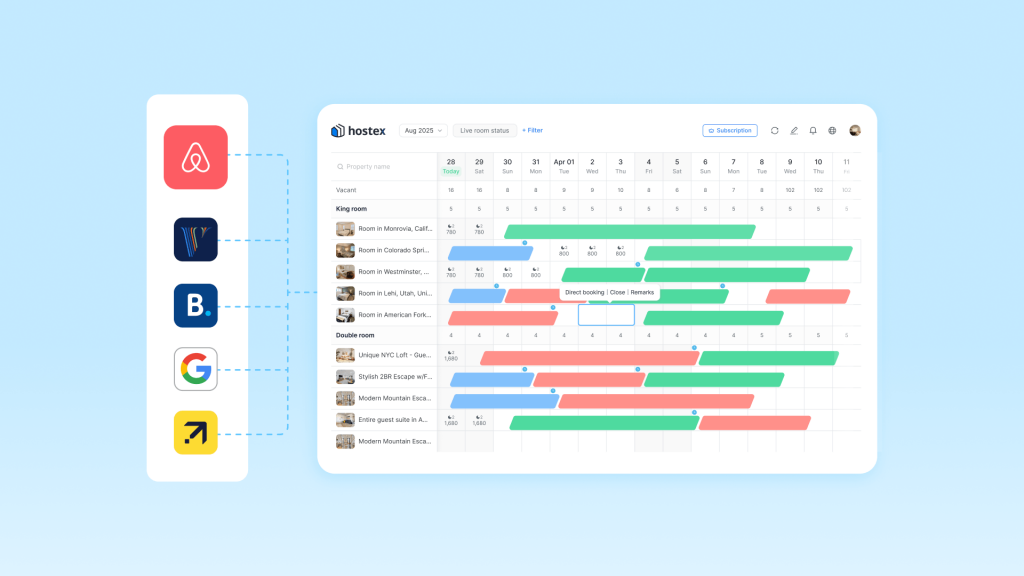
A double booking happens when two guests successfully reserve the same property for the same dates. While it can happen for several reasons, it’s most common when hosts manage listings across multiple booking platforms without reliable calendar synchronization.
Here are the four most common causes.
1. Calendar Sync Delay
One of the most common causes is calendar sync delay. When a booking comes in on Airbnb, your Vrbo calendar doesn’t update instantly unless both platforms are connected through an API-enabled channel manager. If another guest books the same dates before the calendars sync, you’ll end up with a double booking.
iCal feeds, which many hosts rely on, operate on a pull schedule. Airbnb’s iCal sync can take up to 3 hours to reflect a new reservation, while Vrbo typically updates in about 30 minutes. That synchronization delay creates a window where double bookings can happen.
For example, a guest books your Airbnb listing at 9:00 PM, but the iCal feed doesn’t update Vrbo until midnight. If another guest books the same dates on Vrbo during that window, both reservations may be confirmed.
2. The Manual Update Trap
The more platforms you use and the busier you get, the easier it becomes to miss a calendar update. One skipped entry or one forgotten platform is enough to create a conflict.
Missing a manual calendar update is one of the most common sources of human error in short-term rental management. As booking volume grows, even careful hosts are more likely to overlook an update.
3. The Direct Booking Blind Spot
This often catches growing hosts off guard. A repeat guest emails you directly. A long-term renter calls. You accept the booking, take a deposit, and forget to block those dates on Airbnb and Vrbo.
Your OTA calendars still show those dates as available, creating a double booking risk the next time someone books online.
4. Owner Stays and Flexible Check-Outs
When a property owner decides to stay in their own unit, those dates need to be blocked across every connected booking channel. If the request is communicated informally through a text message or phone call, it’s easy to forget to update every calendar.
A similar issue can happen when guests request late check-outs or early check-ins. While this isn’t technically a double booking, it can create the same operational conflicts if availability isn’t updated promptly.
What Double Bookings Really Cost
A double booking is more than an inconvenience. Depending on the platform and when the cancellation occurs, it can lead to financial penalties, lower search visibility, lost host status, and expensive guest relocation costs.
1. Airbnb Cancellation Fees
Airbnb взимает с хозяев плату cancellation fee based on when the cancellation happens:
| Timing | Fee |
|---|---|
| 48 hours or less before check-in, or after check-in | 50% of the reservation amount |
| 48 hours to 30 days before check-in | 25% of the reservation amount |
| Более 30 дней до заезда | 10% of the reservation amount |
The minimum cancellation fee is $50. Fees are calculated based on the reservation amount, including the nightly rate, cleaning fee, and pet fees, but excluding taxes and Airbnb service fees.
2. Vrbo Cancellation Fees
Vrbo follows a similar tiered structure with additional penalties, although some details may vary by region.
| Timing | Fee |
|---|---|
| At check-in or after | 100% of nights not stayed |
| 48 hours or less before check-in | 50% of the reservation amount |
| 48 hours to 30 days before check-in | 25% of the reservation amount |
| Более 30 дней до заезда | 10% of the reservation amount |
The minimum cancellation fee is $50 plus applicable taxes, with no maximum cap. Hosts also forfeit the payout for the cancelled reservation. In addition, Vrbo may suspend the affected listing for seven days beginning 10 days after the cancellation, and the cancelled dates remain blocked on the calendar.
3. The Hidden Costs
Platform penalties are only part of the financial impact.
- Lower search visibility. Repeated host cancellations can hurt your listing’s performance in search results on both Airbnb and Vrbo. On Airbnb, a host-initiated cancellation may also result in an automated public cancellation notice or guest-facing record, depending on the circumstances.
- Losing Superhost or Premier Host status. Airbnb requires Superhosts to maintain a host cancellation rate below 1%, while Vrbo applies a similar standard for Premier Hosts. For hosts with fewer than 100 annual bookings, a single avoidable cancellation can be enough to exceed that threshold.
- Guest relocation expenses. If you need to move a guest to another property, you’re typically responsible for covering the price difference if the replacement accommodation costs more. During holidays or peak travel seasons, those additional costs can quickly exceed the original booking value.
Example.
Imagine you cancel a three-night reservation worth $600 ($200 per night) less than 48 hours before check-in. Airbnb charges a $300 cancellation fee. If relocating the guest to a comparable property costs an extra $80 per night, you’ll pay another $240 out of pocket. Before accounting for lost future bookings or reputational damage, that single double booking has already cost $540.
Comparing Three Ways to Prevent Double Bookings
Managing availability across multiple booking platforms comes down to three approaches: manual updates, iCal synchronization, or an API-powered channel manager.
| Особенность | Руководство | iCal | Менеджер каналов |
|---|---|---|---|
| Sync speed | Depends on you | 30 minutes to 3 hours | Near real-time |
| What syncs | Nothing automatically | Availability dates | Dates, rates, rules, reservations |
| Instant Book support | Нет | Ограниченный | Да |
| Direct booking integration | Руководство | Not supported | Да |
| Monthly cost | Бесплатно | Бесплатно | Paid subscription |
| Human effort | Высокий | Середина | Низкий |
| Double booking risk | Высокий | Середина | Низкий |
| Лучше всего подходит для | 1 property, 1 platform | Small portfolios across a few platforms | Multiple properties and channels |
Option 1: Manual Calendar Management
How it works.
You update each platform yourself whenever a reservation comes in. After receiving a booking on Airbnb, you manually block the same dates on Vrbo and any other channels.
When it works.
Manual management is suitable for hosts with one property listed on a single platform. With only one calendar to maintain, there is little risk of synchronization issues.
The risks.
The problem starts when you add more platforms:
- A guest books while you are asleep, leaving a gap before you can update other calendars.
- Guests booking across different time zones can create conflicts before you notice the reservation.
- As booking volume increases, missed updates become more likely.
Cost.
Free, but the tradeoff is your time and the risk of human error.
Option 2: iCal Calendar Sync
How it works.
iCal is a free calendar synchronization method built into most booking platforms. You export your Airbnb calendar link, import it into Vrbo, and the platforms exchange availability updates automatically.
However, iCal is not a real-time connection. It only updates availability after each platform checks the calendar feed.
What iCal syncs.
iCal typically only syncs confirmed reservation dates or blocked availability. It does not sync reservation details such as guest info and nightly rates.
The delay problem.
iCal feeds operate on a pull schedule, meaning each platform checks for updates at its own interval.
| Платформа | Maximum iCal Update Delay |
|---|---|
| Airbnb | Up to 3 hours |
| Врбо | Approximately 30 minutes |
| Booking.com | Varies by platform integration |
Source: Центр помощи Airbnb и Справочный центр Vrbo
Because updates are not instant, a booking can still come through on another platform before the blocked dates appear.
When it works.
iCal is a reasonable starting point for hosts with one or two properties across a small number of platforms. It reduces manual work, but it does not eliminate double-booking risk.
Cost.
Free.
Option 3: Channel Manager with API Integration
How it works.
А менеджер канала connects directly with booking platforms through API integrations instead of relying on calendar feeds. When a reservation is made, availability updates are automatically sent to all connected channels.
What API sync covers.
Unlike iCal, API connections can synchronize:
- Доступность
- Nightly rates and pricing rules
- Minimum stay requirements
- Booking restrictions
- Reservation details
Why it matters.
Calendar availability is only one part of preventing booking conflicts. For example, if you change your minimum stay from two nights to three nights, iCal will not update that rule on other platforms. A guest could still book a reservation that no longer matches your requirements.
API connections keep availability, pricing, and booking rules aligned across channels, reducing the risk of both double bookings and operational mistakes.
Cost.
Channel manager pricing varies depending on the provider and the size of your portfolio. Many solutions charge a monthly subscription, typically ranging from around $5 to $100+ per month depending on features and the number of listings managed.
For example, Hostex is a full property management system that includes channel management as one of its core features. With plans starting at $4.90/month, hosts can access channel synchronization along with other tools to manage their vacation rental operations from one platform.
Which Option Fits Your Situation?
1 Property on 1 Platform
Manual management is usually enough. You only need to maintain one calendar, and the chance of a scheduling conflict is low.
If you add another booking platform later, consider moving to iCal or an API-based solution.
1 Property on 2 Platforms
iCal is a practical starting point because it is free and easy to set up. However, avoid treating it as real-time synchronization. If you use Мгновенная книга on multiple platforms, regularly monitor your calendars and consider upgrading as booking volume increases.
2 to 5 Properties Across Multiple Platforms
At this stage, a channel manager becomes much more valuable. Managing Airbnb, Vrbo, and other channels with iCal requires ongoing manual checks and creates more opportunities for mistakes.
The cost of a channel manager is often lower than the time spent manually managing calendars — or the cost of recovering from a single double booking.
5+ Properties or a Team
A channel manager becomes essential when multiple people manage reservations. A centralized system with permissions and activity tracking helps prevent unauthorized changes and keeps everyone working from the same availability data.
Platforms like Hostex combine channel management with property management tools, allowing teams to manage listings, reservations, and calendar updates from one place.
Double Booking Happened: Your 5-Step Emergency Plan
Even with the right systems in place, double bookings can still happen. When they do, the priority is to protect your guests, minimize financial damage, and fix the process that caused the issue.
Step 1: Contact Both Guests Immediately
Act quickly once you discover the conflict. Contact both guests through the platform messaging system so there is a clear record of communication.
Be transparent, take responsibility, and avoid making excuses. Let both guests know you are actively working on a solution and will provide updates as soon as possible.
Step 2: Find a Solution for the Affected Guest
If both reservations cannot be honored, you need to decide which booking can be accommodated and which guest needs to be relocated.
Consider factors such as:
- Which reservation was confirmed first
- Which guest has more flexibility
- The impact of relocation on the guest’s travel plans
For the guest who needs to move, find a comparable or better accommodation nearby. If the replacement property costs more, be prepared to cover the price difference and help coordinate the relocation process.
Step 3: Contact the Booking Platform
Notify the booking platform as soon as possible. Explain the situation honestly and provide any relevant details.
Depending on the circumstances, platforms may offer limited assistance, such as helping guests find alternative accommodations or reviewing certain fees. However, do not rely on platform support to resolve the situation completely.
Step 4: Manage the Financial Impact
A double booking can result in several costs, including cancellation fees, replacement accommodation expenses, and potential damage to your listing performance.
Avoid delaying the cancellation or ignoring the guest. The long-term impact of a poor guest experience can be much higher than the immediate financial loss.
If appropriate, consider offering additional compensation, such as a future stay discount or partial refund, to show that you take responsibility for the inconvenience.
Step 5: Find and Fix the Root Cause
A double booking is usually a symptom of a larger process issue. Review what caused the conflict:
- Did an iCal update arrive too late?
- Was a manual calendar update missed?
- Was a direct booking not added to your OTA calendars?
- Did multiple team members make conflicting changes?
Fix the underlying workflow instead of only solving the immediate problem. If iCal limitations caused the issue, it may be time to consider an API-connected channel manager.
Common Mistakes That Cause Double Bookings
Most double bookings are not caused by one major mistake. They usually happen because a small gap in the booking process goes unnoticed.
1. Relying on iCal as Real-Time Synchronization
iCal is useful for basic calendar sharing, but it is not designed for instant availability updates. Hosts who rely on iCal across multiple platforms may still have a window where overlapping reservations can occur.
2. Forgetting to Block Direct Bookings
Direct bookings are easy to overlook because they happen outside OTA platforms. Every phone call, email inquiry, or repeat guest reservation should trigger an availability update across all channels.
3. Enabling Instant Book Everywhere Without API Sync
Instant Book increases conversion, but using it across multiple platforms without real-time synchronization increases the chance of receiving overlapping reservations.
4. Letting Multiple People Manage Calendars Without Clear Processes
When owners, assistants, cleaners, or co-hosts all update availability, unclear responsibilities can lead to accidental calendar conflicts.
A reliable booking workflow requires a single source of truth for availability.
Часто задаваемые вопросы
Does Airbnb refund guests for double bookings?
Airbnb does not automatically refund guests for host-cancelled reservations. However, hosts who cancel may be charged cancellation fees, and Airbnb may assist the guest with finding another accommodation. Hosts are responsible for handling the situation appropriately.
Can I use iCal sync for free to prevent double bookings?
Yes. iCal sync is free and available through Airbnb, Vrbo, and many other booking platforms. However, it does not provide real-time synchronization and typically only shares availability dates, not rates, minimum stays, or booking rules.
For one property listed on two platforms with low booking volume, iCal can be a practical starting point. As your business grows, an API-connected channel manager provides more reliable synchronization.
How fast is API calendar sync compared to iCal?
API synchronization is typically near real-time, while iCal updates depend on each platform’s refresh schedule and can take from minutes to several hours. This delay is the main reason iCal carries a higher double booking risk.
Will Airbnb remove a bad review from a double-booking cancellation?
A host cancellation may result in an automated cancellation record or guest-facing notice depending on the circumstances. Whether a review can be removed depends on Airbnb’s current review policies and the specific situation.
How does a channel manager help prevent double bookings?
A channel manager prevents double bookings by keeping availability synchronized across every connected booking platform. Instead of manually updating multiple calendars, hosts can manage reservations, availability, and booking rules from one centralized system.
Hostex combines channel management with a full property management system, helping hosts sync Airbnb, Vrbo, Booking.com, and direct bookings from a single dashboard. This reduces manual errors, keeps calendars accurate, and gives hosts more control as their portfolio grows.
Do I need a channel manager if I only list on one platform?
Not necessarily. If you manage one property on one platform, manual calendar management is usually sufficient. A channel manager becomes more valuable when you add multiple platforms, more properties, or direct bookings.
How much does a channel manager cost?
Channel manager pricing varies depending on the provider, features, and number of listings. Many solutions charge a monthly subscription, with entry-level plans often starting around a few dollars per month.
Например, Хостекс is a full PMS with channel management, automated messaging, direct booking tools, and other features starting at $4.90/month.
 Russian
  English
  Japanese
  Spanish
  Arabic
  French
  German
  Portuguese
  Korean
  Italian
  Thai
Thai