

في منتصف أغسطس 2025، أجرت Airbnb تغييرًا كبيرًا على هيكل الرسوم, which initiated widespread discussions across social media and the Airbnb host community. Many hosts are concerned that these changes could negatively impact their profits. Key questions being raised include:
- هل ستؤثر الرسوم المتزايدة على معدلات الحجز والربحية الإجمالية؟
- هل تقوم Airbnb بتطبيق هيكل الرسوم الموحدة الجديد هذا على جميع القوائم؟
- هل الرسوم المفردة مفيدة أم ضارة للمضيف، وكيف يتم الاختيار؟
هل هذه المخاوف في محلها؟ لنتعمق أكثر في سياسة رسوم Airbnb الجديدة.
ما هي سياسة الرسوم الأحدث لدى Airbnb؟
Airbnb charges a service fee on nearly every booking. In 2025, the platform renamed its host-only structure the “single fee” and tightened who must use it (مركز مساعدة Airbnb). Two structures still describe how that fee works.
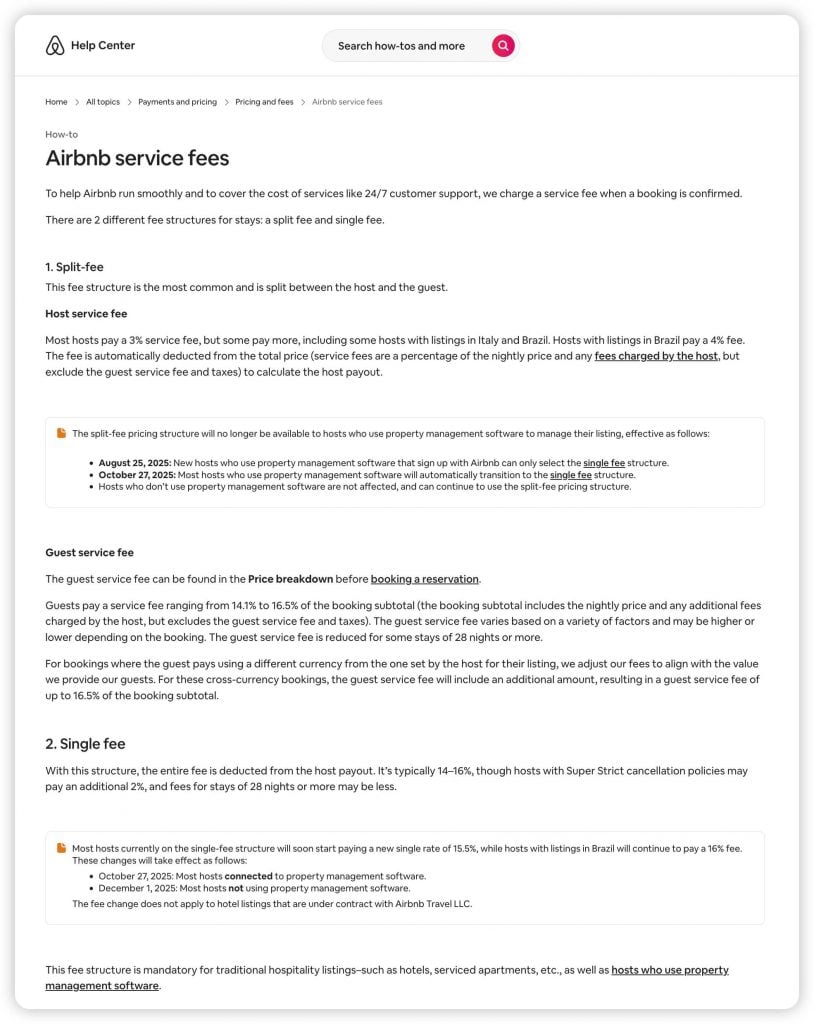
رسوم مقسمة
Under the split model, the cost is split.
The host pays about 3 percent (4 percent in Brazil). The guest pays a separate fee of 14.1–16.5 percent on top of the nightly rate. The guest sees that the guest fee is itemized before they pay.
رسوم واحدة
Under the single model, one fee comes out of the host payout.
Most hosts pay 15.5 percent. The rest typically pay 14–16 percent, and listings in Brazil and Mexico pay 16 percent. Guests no longer see a separate Airbnb service line at checkout.
Airbnb says the move simplifies pricing because guests see one total instead of a base rate plus a separate charge (Airbnb official update).
What Changed with the Airbnb Single Fee?
1. A New Name
Since 2020, Airbnb offered two structures: split fee and host-only fee. Now, the new single fee replaces the host-only feeيعكس هذا المصطلح الجديد التحول في كيفية حساب الرسوم وخصمها من مدفوعات المضيف.
2. Who It Applies To
The single fee is mandatory for traditional hospitality listings such as hotels and serviced apartments. It is also mandatory for hosts who use property management software.
In the past, hosts in the United States, Canada, the Bahamas, Mexico, Argentina, Taiwan, and Uruguay could keep split pricing if they used a PMS. And now, that exception is gone.
3. The Fee Percentage
التغييرات في نسب الرسوم بموجب هيكل رسوم Airbnb الجديد هي كما يلي:
- في ظل هيكل الرسوم السابق للمضيف فقط، كان المضيفون يدفعون عادةً حوالي 15%. وقد ارتفع هذا المبلغ قليلاً الآن إلى 15.5% مع هيكل رسوم Airbnb Single الجديد.
- في ظل نظام "تقسيم الرسوم"، كان معظم المضيفين يدفعون رسوم خدمة تتراوح بين 3% و5%. استُبدل هذا الآن برسوم ثابتة. 3% رسوم الخدمة للمضيفين، على الرغم من أن بعض المضيفين في دول مثل إيطاليا والبرازيل قد يدفعون رسومًا أعلى.
- The guest service fee used to range between 11% and 12% of the booking subtotal. Now, it has increased to 14.1% to 16.5%.
| Split Fee (old) | Single Fee (current) | |
| Who pays | Host + guest | Host only |
| Host rate | About 3% (4% Brazil) | 15.5% for most; 14–16% rest; 16% Brazil, Mexico |
| Guest rate | 14.1–16.5% at checkout | None shown at checkout |
| Charged on | Nightly + host fees (guest side) | Full subtotal: nightly + cleaning + extras |
| PMS hosts | Could keep split (some countries) | Required |
| Bookings already made | n/a | Keep original structure |
لماذا أثار تغيير رسوم Airbnb مثل هذا الجدل؟
1. زيادة كبيرة في الرسوم
بموجب نظام تقسيم الرسوم، كان الضيوف يدفعون رسوم خدمة تتراوح بين 14.11 و16.51 دولارًا أمريكيًا لكل خدمة. وعند إضافة حصة المضيف البالغة 31 دولارًا أمريكيًا لكل خدمة، كانت Airbnb تفرض فعليًا رسومًا تتراوح بين 17.11 و19.51 دولارًا أمريكيًا لكل خدمة من إجمالي كل حجز.
بموجب هيكل الرسوم الفردية، كان المضيفون يدفعون في البداية 15%، ولكن هذا المبلغ ارتفع الآن إلى 15.5%.
هذه الزيادة مُحبطةٌ للمُضيفين بالتأكيد، رغم أن Airbnb قد منحت مهلةً مؤقتةً للانتقال. تؤثر زيادة الرسوم بشكلٍ مباشر على استراتيجيات تسعير المُضيفين وربحيتهم، كما تؤثر بشكلٍ غير مباشر على تنافسية قوائمهم ومعدلات حجزها.
2. الغموض في اللغة
تبدو قواعد Airbnb الجديدة مُفصّلة وشاملة، مع تفصيل واضح لكل ما يحتاج المُضيفون معرفته. مع ذلك، بعض التفسيرات مُبهمة وتستخدم لغة مُبهمة، مما يُسبب ارتباكًا لدى العديد من المُضيفين.
على سبيل المثال، يستخدم Airbnb بشكل متكرر مصطلح "معظم المضيفينلكن هذا يثير سؤالاً شائعاً: من المقصود تحديداً بـ "معظم المضيفين"؟ يريد المضيفون معرفة: "هل أنا مُدرج ضمن مجموعة "الأكثر"، أم سأُستبعد؟"
في الواقع، استخدمت Airbnb في الماضي مصطلحات مشابهة، مما يُفهم على أنه وسيلة من المنصة لإفساح المجال للتأويلات. هذا يُمكّنها من التعامل مع ردود الفعل السلبية المحتملة بفعالية أكبر.
على سبيل المثال، عندما طرحت Airbnb رسوم المضيف فقط لأول مرة عام ٢٠٢٠، طُبّقت عالميًا في البداية. ومع ذلك، ربما بسبب الطلبات القوية من بعض المناطق، اضطرت Airbnb إلى توفير استثناءات للمضيفين في دول مثل الولايات المتحدة الأمريكية وكندا وجزر البهاما والمكسيك والأرجنتين وتايوان وأوروغواي.
3. التصريحات المتناقضة
تتضمن وثائق Airbnb إخلاءين للمسؤولية على وجه الخصوص تسببا في حدوث ارتباك بين المضيفين:
"وينص البيان الأول على ما يلي:"لا يتأثر المضيفون الذين لا يستخدمون برامج إدارة الممتلكات، ويمكنهم الاستمرار في استخدام هيكل التسعير بالرسوم المقسمة."
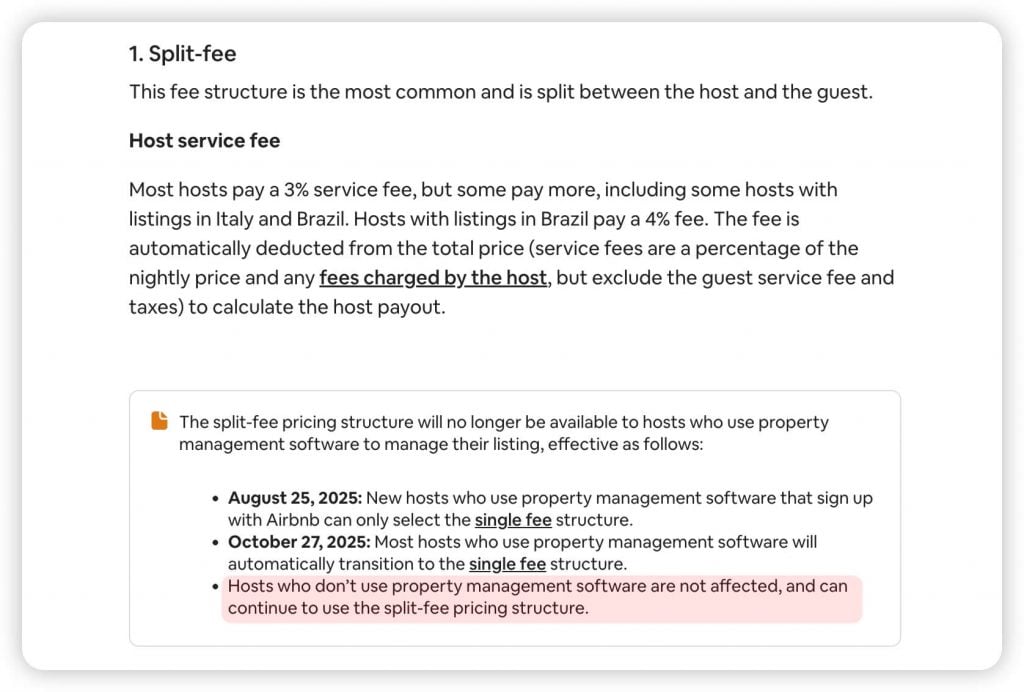
ومع ذلك، ينص البيان الثاني على ما يلي: ستدخل هذه التغييرات حيز التنفيذ لمدة "معظم المضيفين لن يستخدموا برامج إدارة الممتلكات اعتبارًا من 1 ديسمبر 2025."
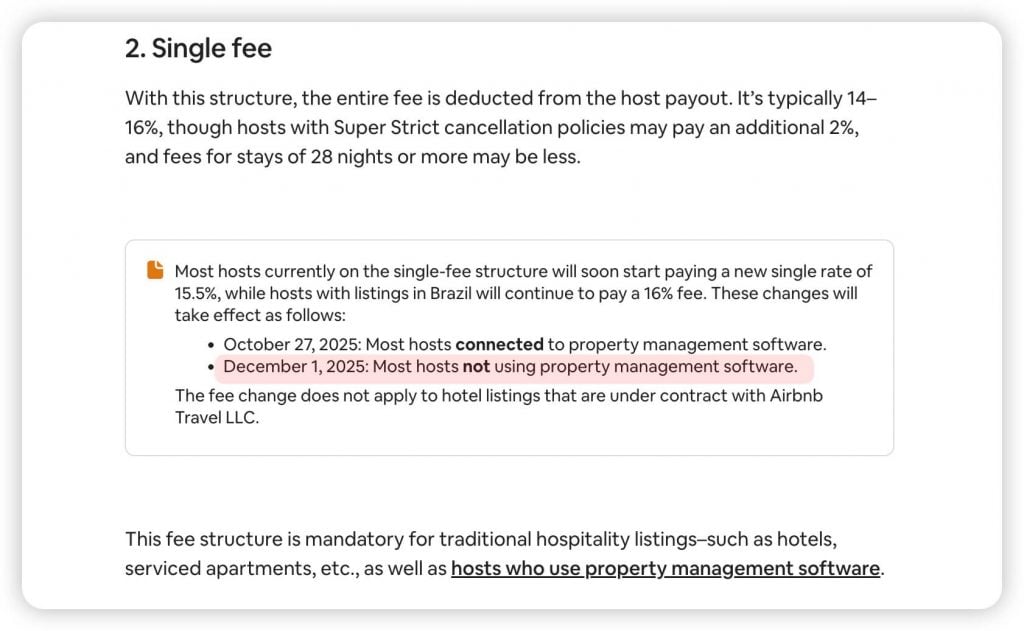
يبدو أن هذين البيانين يتناقضان مع بعضهما البعض، مما يترك المضيفين الذين لا يستخدمون برامج إدارة العقارات غير متأكدين من السياسة الحقيقية.
في الواقع، يبدو أن نية Airbnb قد توضّحت في بداية الفقرة الثانية، حيث ذكرت: "سيبدأ معظم المُضيفين المُشتركين حاليًا في نظام الرسوم الفردية بدفع سعر فردي جديد قريبًا". بمعنى آخر، سيشهد المُضيفون الذين اختاروا سابقًا نظام الرسوم المُخصص للمُضيف فقط، بغض النظر عمّا إذا كانوا يستخدمون برامج إدارة العقارات أم لا، زيادة في رسومهم إلى 15.5%.
من وجهة نظري، لا تقول Airbnb أن جميع المضيفين سيضطرون إلى التحول إلى هيكل الرسوم الفردية بدءًا من 1 ديسمبر 2025، بل إن أولئك الذين كانوا يستخدمون رسوم المضيف فقط سابقًا سيواجهون زيادة في الرسوم.
How the Single Fee Affects Your Payout
The fee now lands on the whole booking subtotal, including cleaning, pet, and extra-guest fees. Taxes and security deposits are excluded. That changes your math, and it means cleaning fees now carry the 15.5 percent haircut too. Here is a simple example using round numbers.
Say you listed at 100 under the old split model. You kept about 97 after the 3 percent host fee. Under the single fee at the same 100 price, Airbnb deducts 15.5 percent. Your payout becomes about 84.50.
That is roughly a 12–13 percent drop on every future booking, not a one-time hit.
To hold your payout steady, raise your listed price. Moving from 100 to about 115 keeps your take near 97, because 115 minus 15.5 percent equals about $97. Another way to frame it: divide your target payout by 0.845. The result is the listed price you need.
These figures are examples only. Your real rate depends on your location, cancellation policy, and listing type. They are not tax or financial advice.
How to Reprice Your Listings: Step by Step
You do not need to guess. Follow four steps.
Step 1: Check Your Current Fee Structure
Open Airbnb, go to Today, then Menu, then Earnings. Select a reservation and look under Host payout. The host service fee line tells you which structure is active.
Step 2: Use Airbnb’s Price Adjustment Tool
Airbnb built an in-app tool that adjusts prices across all your listings at once. Run it before your deadline so payouts stay level. If you prefer manual control, apply the divide-by-0.845 formula listing by listing. Do not raise prices so high that your listing looks expensive next to your other channels. Reprice with your whole distribution in mind.
Step 3: If You Use a PMS Like Hostex
Hosts who manage listings through Hostex were part of Airbnb’s earliest migration wave. The fee structure follows Airbnb’s PMS rollout, so there is no manual switch to flip. Open your Hostex pricing settings to confirm the rate, then adjust your listed price there. Because Hostex keeps Airbnb pricing in sync with your other connected channels, one reprice updates every channel instead of just one.
Step 4: Re-check Your Payout
After repricing, open a test reservation or the Earnings view and confirm the host payout matches your target. If it is low, nudge the listed price up by another percent or two.
VAT note: In countries that charge VAT on service fees, Airbnb’s tool adds the tax automatically unless you are VAT-registered and self-assess. The guest still sees one clean price.
If you manage more than a few listings, repricing them one by one gets old fast. Hostex runs the whole job from one dashboard that keeps your prices in sync across every connected channel. Its batch editor changes many listings together by a set percentage or a fixed amount, and its price-copy tool brings another OTA’s rate directly into Airbnb when you want the channels to match. Beyond pricing, Hostex automates messaging, guest communication, and day-to-day operations, with plans starting at $4.9 per month.

FAQ about Airbnb Single Fee
When did the Airbnb single fee become mandatory?
The rollout ran in waves from late 2025. The final groups moved on September 15, 2026 (outside the EU) and October 13, 2026 (inside the EU).
What happens if I do nothing?
Your listed price stays the same, but Airbnb deducts 15.5 percent from your payout. Expect roughly 12–13 percent less per booking.
How do I keep my payout the same?
Raise your listed price by about 15 percent, or divide your target payout by 0.845. Airbnb’s price adjustment tool does this across all listings at once.
Does this affect bookings I already accepted?
No. Reservations confirmed before your switch keep the fee structure they were booked under.
I use Hostex. Do I need to change anything?
Your fee structure followed Airbnb’s PMS migration automatically. Confirm the rate in Hostex pricing settings and reprice there so every connected channel stays aligned.
Is the fee charged on my cleaning fee too?
Yes. The 15.5 percent applies to the full booking subtotal, which includes cleaning, pet, and extra-guest fees. Taxes and security deposits are excluded.
خاتمة
Airbnb’s single fee changes more than the percentage deducted from each booking. It can affect your pricing, payouts, and overall profitability, especially if you manage multiple listings or use a PMS. The best approach is to understand which fee structure applies to your listings, adjust your rates based on your target payout, and regularly review your earnings as Airbnb updates its policies.
More broadly, keeping up with vacation rental platform policies is an essential part of running a profitable short-term rental business. Airbnb and other OTAs can change fees, pricing rules, and requirements over time, so staying informed helps you avoid unexpected costs and make better decisions about your distribution strategy.


 Arabic
  English
  Japanese
  Spanish
  French
  Russian
  German
  Portuguese
  Korean
  Italian
  Thai
Thai